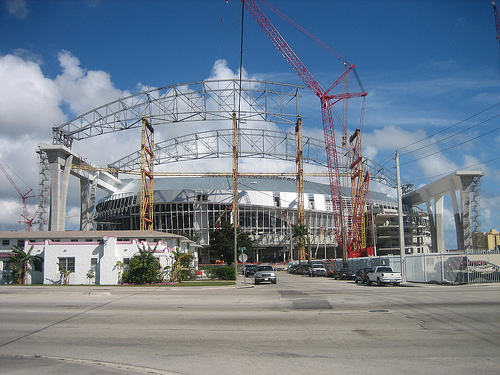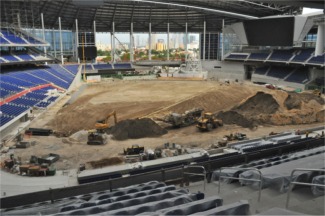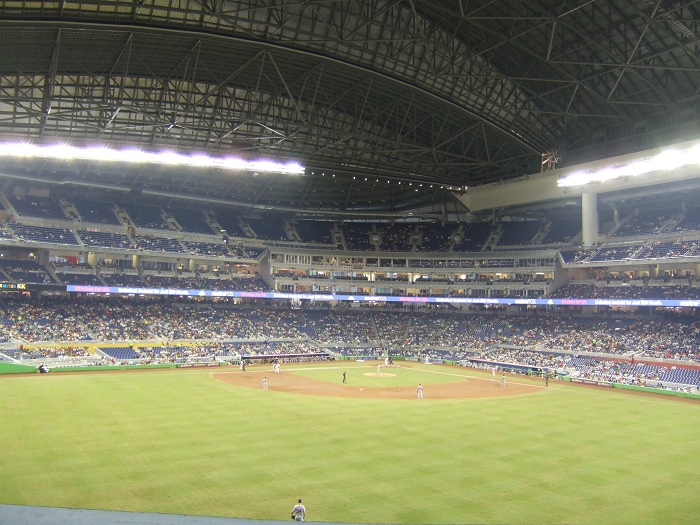
Known for its vibrant culture, diverse population and nightlife, the City of Miami is a sports mecca as it is home to four professional sports franchises, including the Miami Marlins. The Marlins history in Miami is as diverse as its population as they have won two World Series Championships since 1993, but have been plagued by consecutive losing seasons multiple times since their inception. From their inaugural season in 1993 through the 2011 season, the Marlins played at Joe Robbie Stadium (now known as Hard Rock Stadium). Built primarily for the Miami Dolphins (NFL), this stadium was a massive multiple purpose stadium that could seat over 70,000 fans for playoff games, although the Marlins averaged less than 20,000 fans per game each season. Not only was the stadium too big for a baseball team, games were often delayed or postponed due to rain. By the early 2000s the Marlins sought to have a new baseball only stadium built. The team and city officials reviewed numerous potential ballpark locations and financial proposed but none became a reality. Finally in February 2008 the Marlins reached an agreement to construct a new ballpark after city and county commissioners approved funding for a new stadium. Originally scheduled to open in 2011, construction was delayed by a lawsuit challenging the public funding of the project. Built at a cost of $515 million, Miami-Dade County contributed the majority of the construction costs while the City of Miami contributed $13 million and the Marlins $155 million. Located in Little Havana on the site of the former Orange Bowl (Miami Hurricanes/NCAA), construction began in July 2009. For nine seasons the ballpark was named Marlins Park. In March 2021 the team sold the naming rights to loanDepot, a home mortgage company, and the ballpark is now named loanDepot Park (the l is not capitalized in the name).
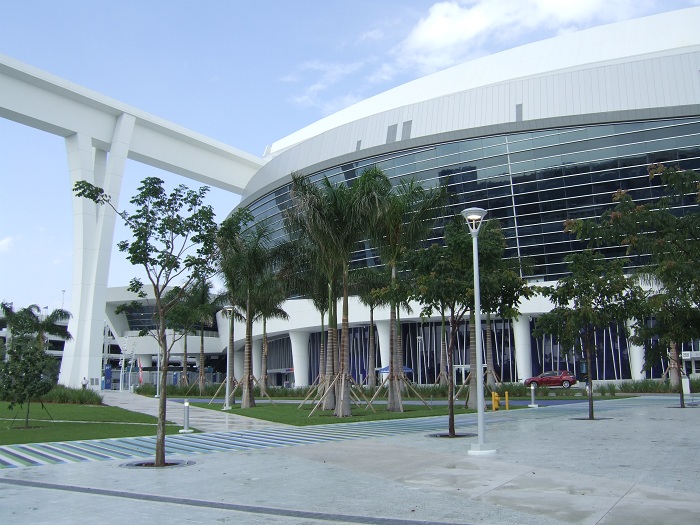
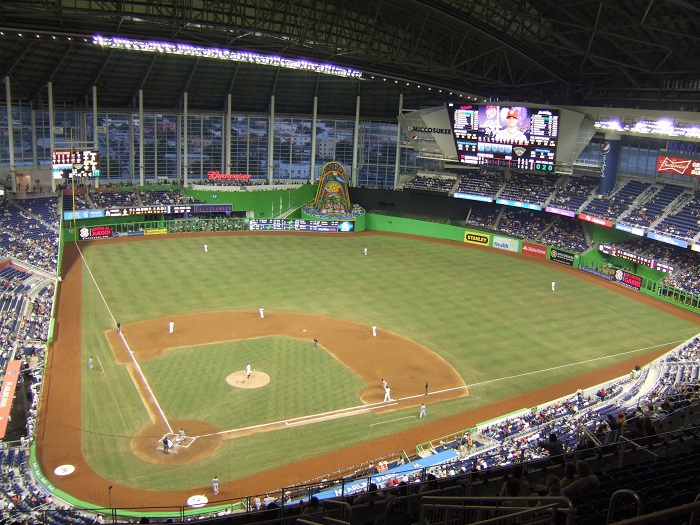
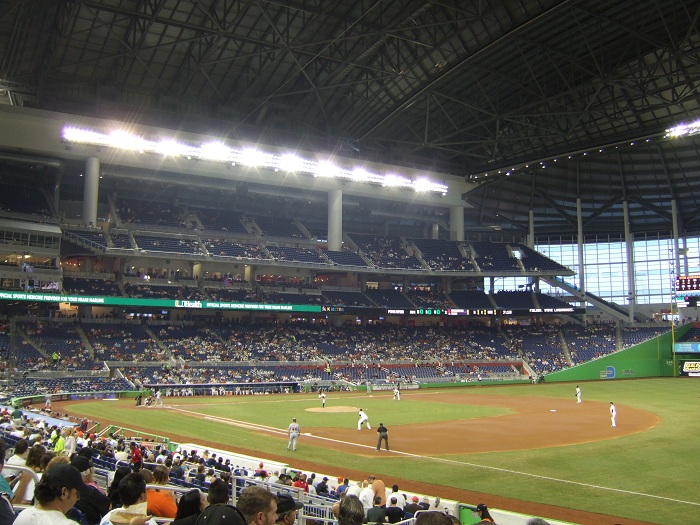
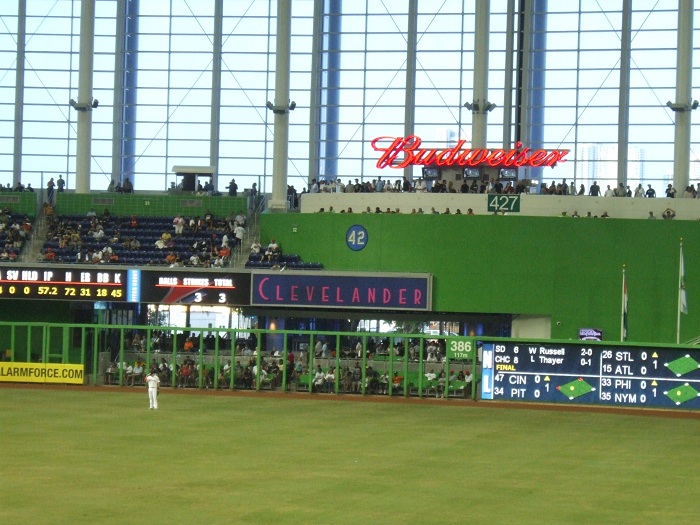
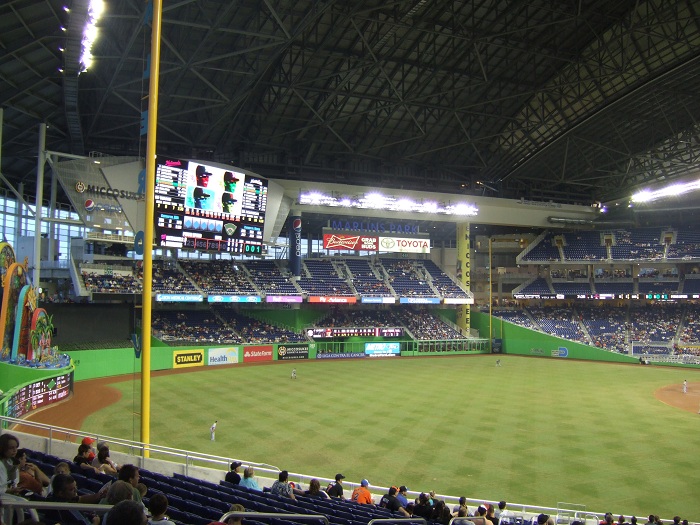
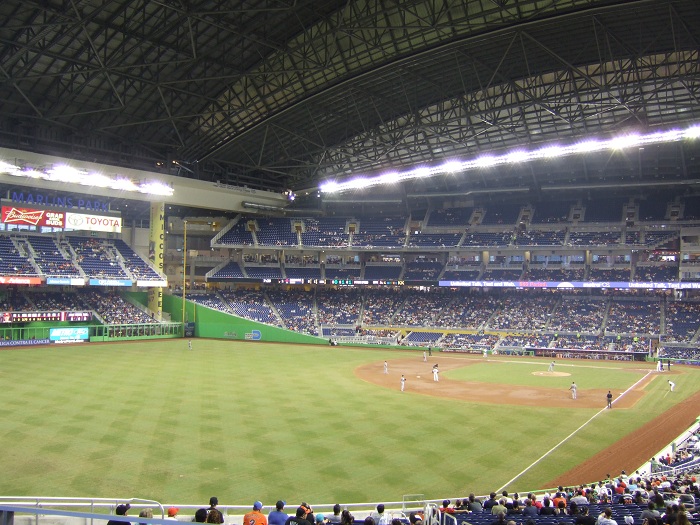
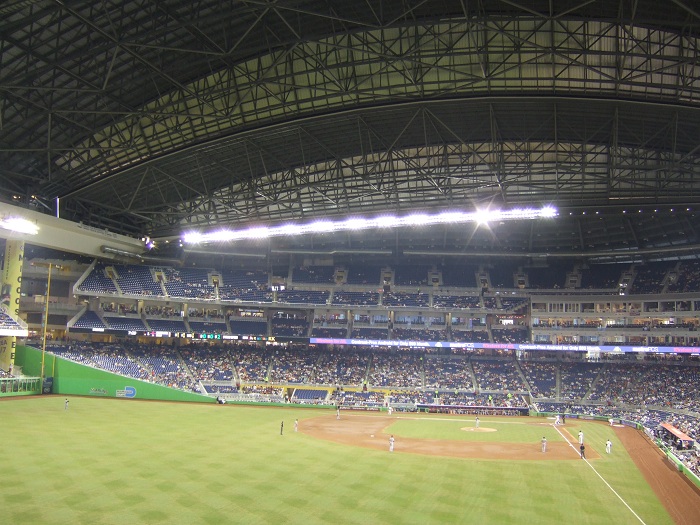
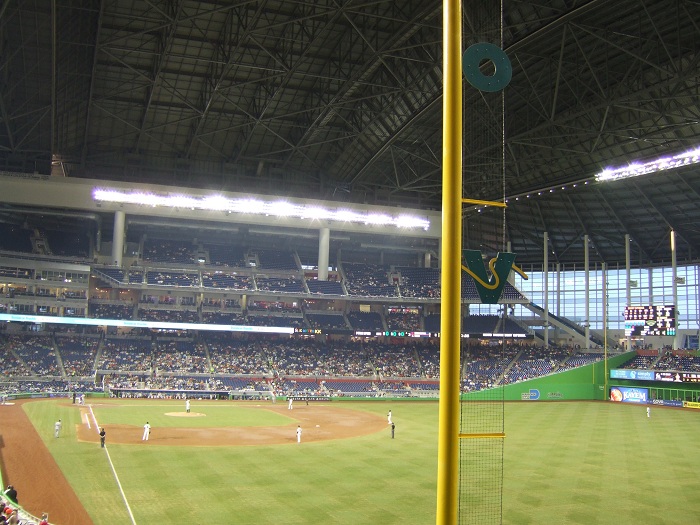
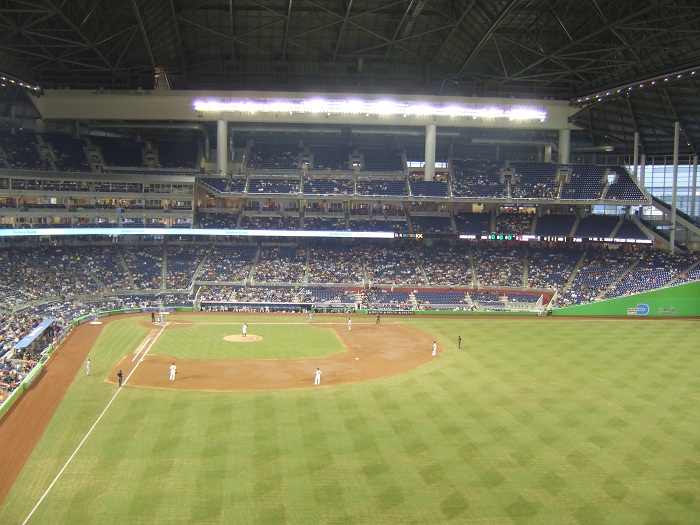
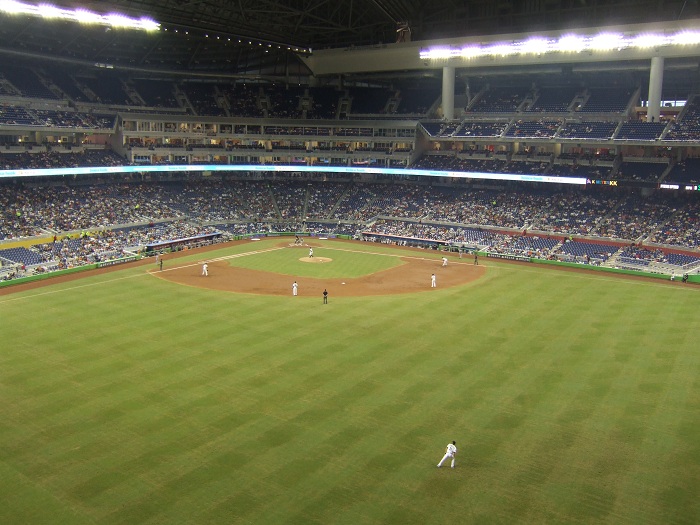
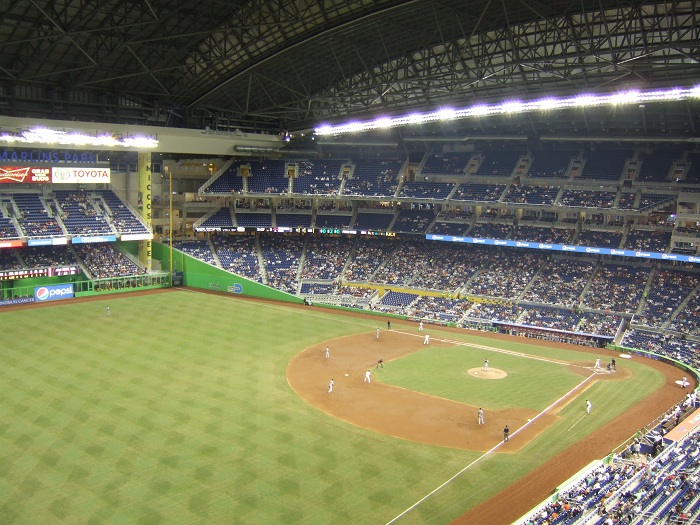
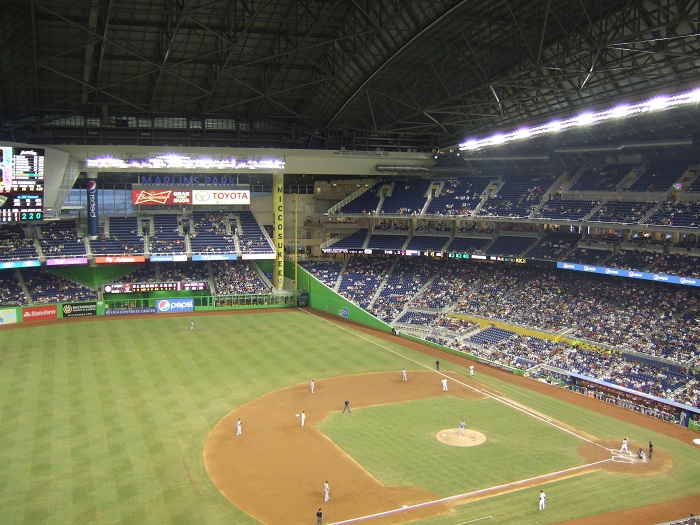
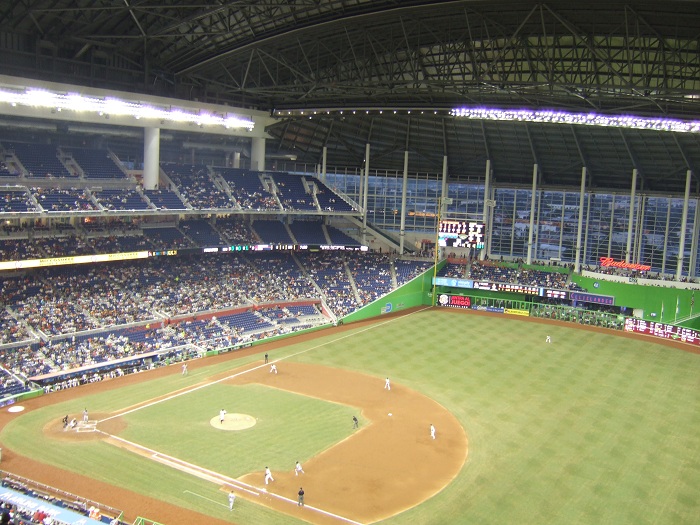
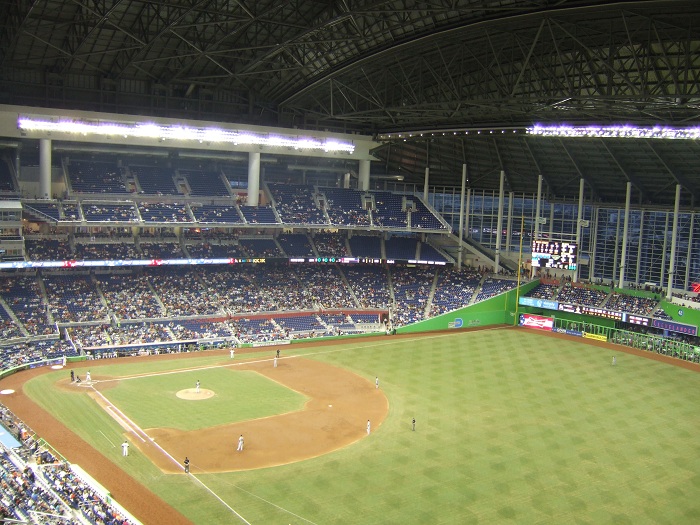
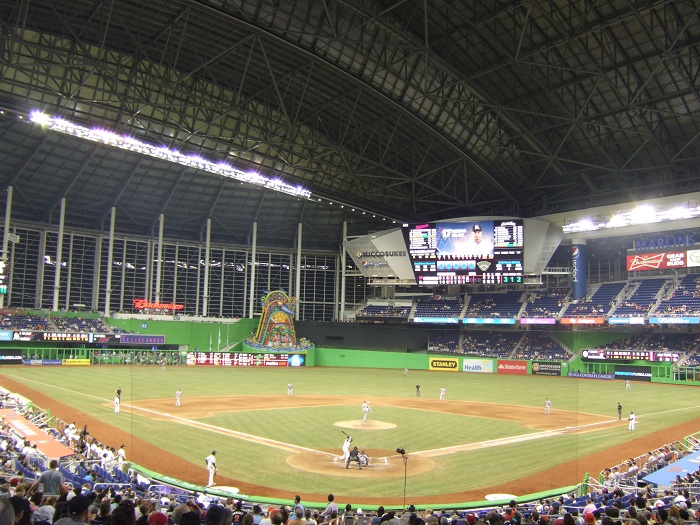
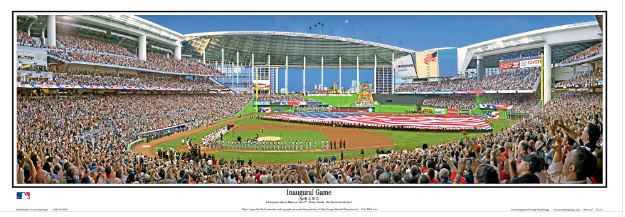
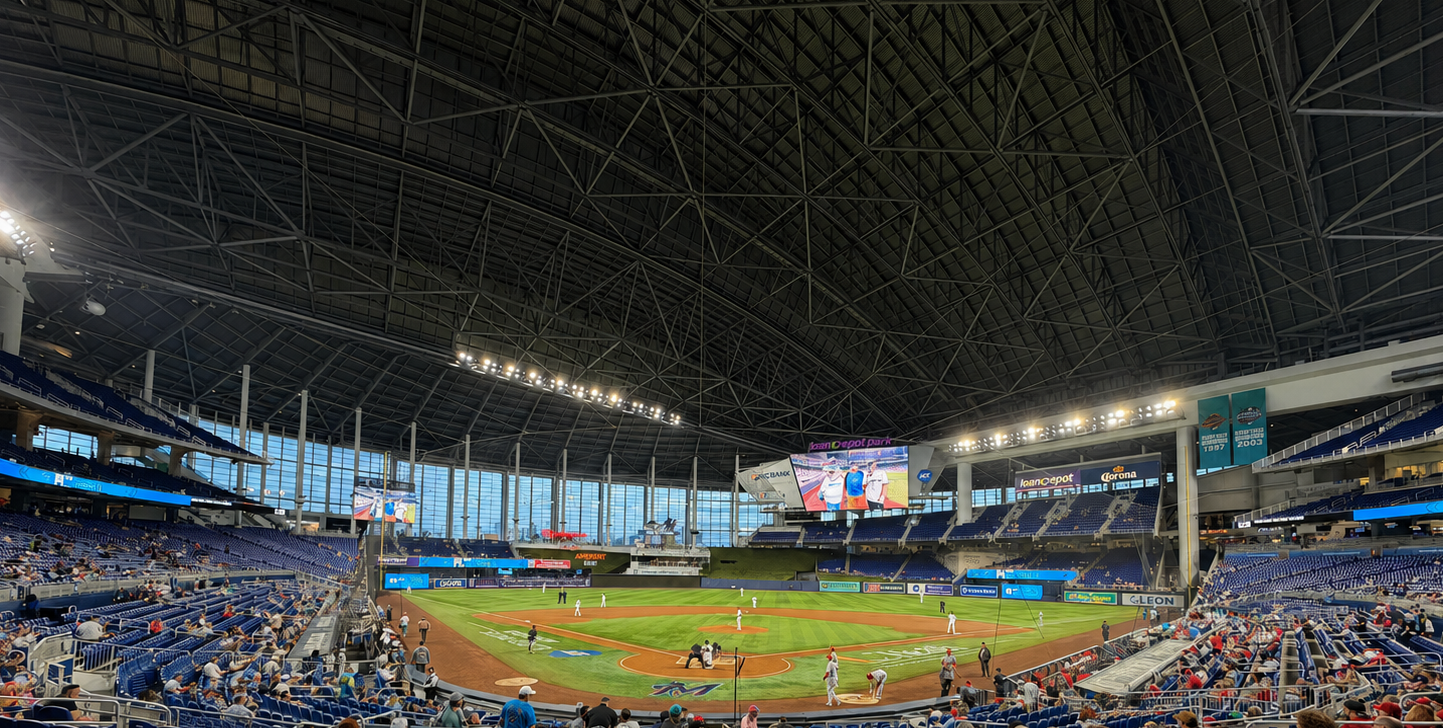
A new chapter in the history of the franchise began on April 4, 2012 when the Marlins played the first game at their new stadium against the St. Louis Cardinals. The ballpark is unlike any other in baseball. It does not feature the traditional classic retro ballpark design similar to Camden Yards. Instead the ballpark features a futuristic design with white stucco, silver metal and glass. One of the most important features of loanDepot Park is its retractable roof. The three panel retractable roof prevents any rain delays and opens or closes in 13 minutes. When open it sits behind the first base grandstand on the west side of the ballpark. Here, on the outside of the ballpark, is a large gathering plaza that allows fans to mingle before games. Inside loanDepot Park three levels of seats extend from the left field foul pole around homeplate to the right field foul pole. Two levels of seats are located above the right field fence with limited seating located behind the left field fence.
| MEMORABLE MOMENTS AT LOANDEPOT PARK |
|
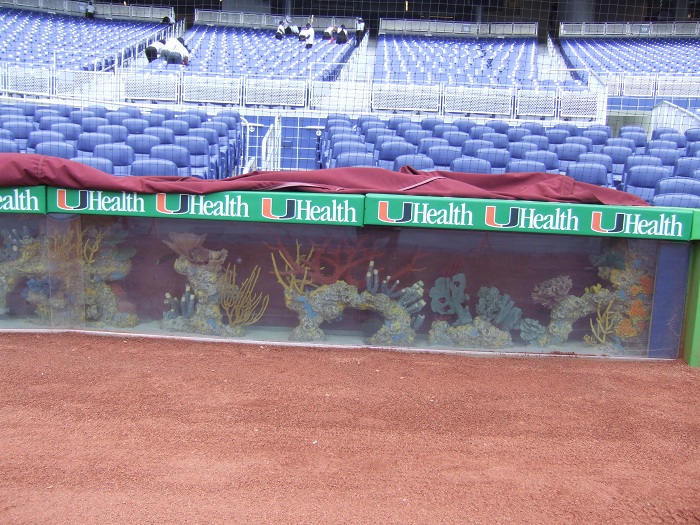
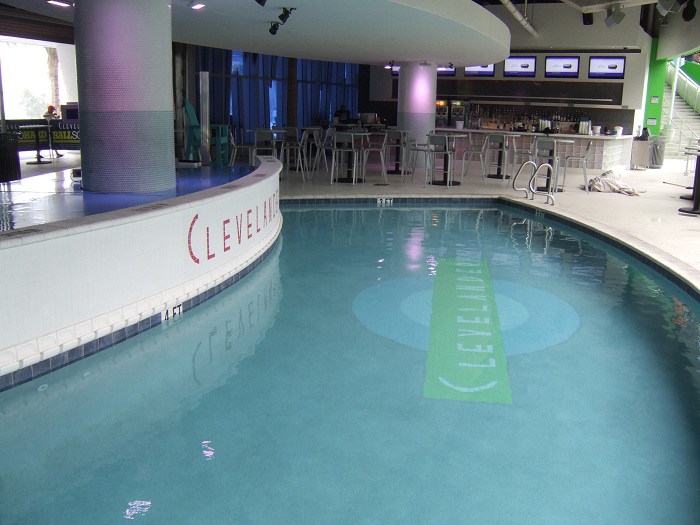
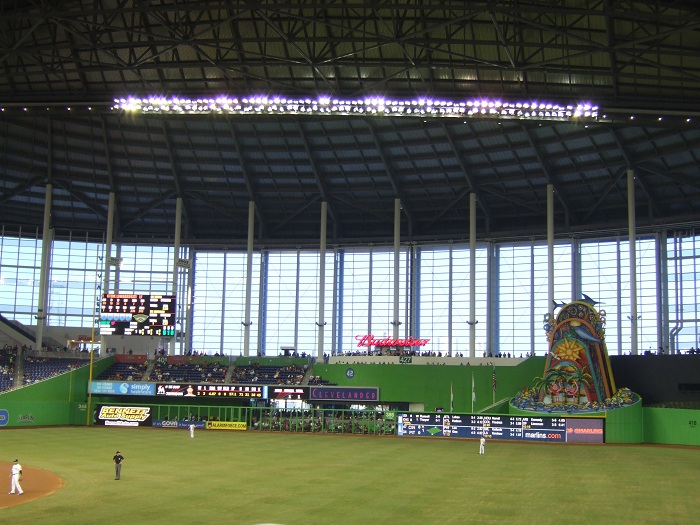
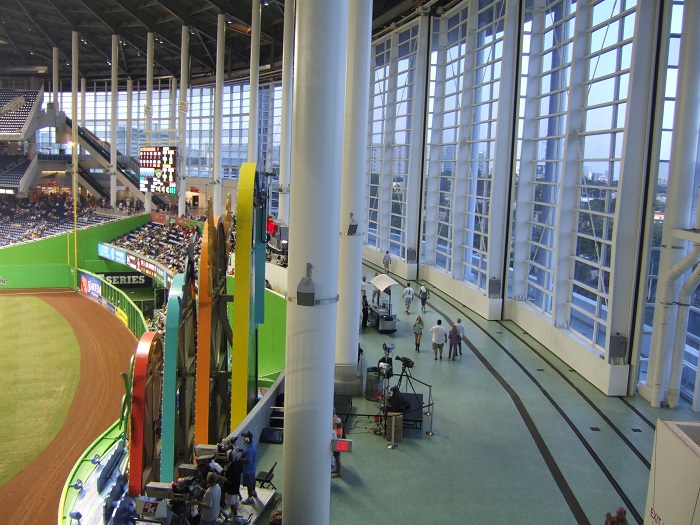
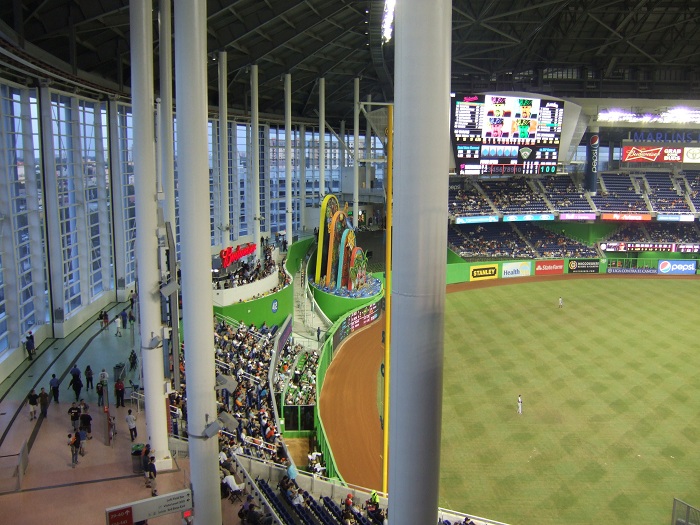
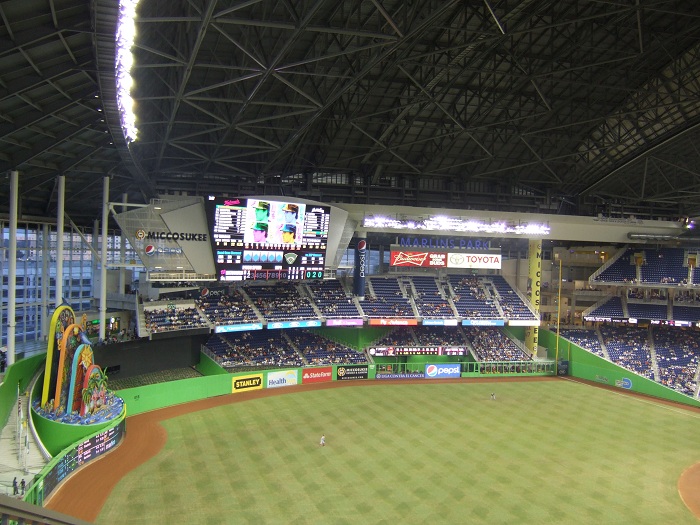
loanDepot Park has a number of unique features around the ballpark. Not only does the ballpark feature a retractable roof, but retractable outfield glass panels. Located behind left field, these panels, six combined at 240 feet long and 60 feet high, open or close in eight minutes and provide a panoramic view of the downtown Miami skyline. The ballpark originally featured a pool on the field level, behind the left field fence next to the Marlins bullpen. However, prior to the start of the 2020 season it was removed and became a new gathering area that features a bar. It also originally included one of the most unique features in baseball behind homeplate. On both sides of the backstop were twin 450 gallon saltwater aquariums containing up to 50 fish. Bulletproof glass prevented the aquariums from shattering in the event a foul ball hit one of them. However, prior to the 2021 season the aquariums were removed. The main HD video/scoreboard is 101 feet wide by 51 feet high above the right-centerfield stands. Another 100 feet wide display within the left field wall displays scores and stats from games throughout MLB. The ballpark has many amenities including a Taste of Miami food court.
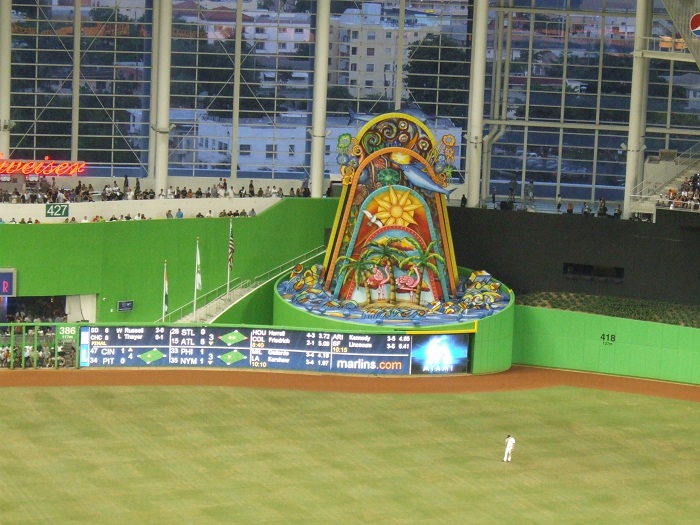
From 2012 through the 2018 season, loanDepot Park had one of the most unique homerun features in baseball. Located behind the outfield fence in left-center field, the colorful, $2.5 million, 75 feet tall structure featured moving waves along the bottom and spins marlins, seagulls and flamingos anytime a Marlins player hits a homerun. Prior to the start of the 2019 season it was moved outside the ballpark. The sculpture continues to move when a Marlins player hits a homerun and during other times throughout the day. Replacing the sculpture inside the stadium is a multistory, standing-room only space for fans. Due to the challenges of growing and maintaining the natural grass playing surface, the Marlins installed synthetic turf prior to the 2020 season.
Since it’s opening in 2011, loanDepot Park has been known as a pitcher-friendly ballpark with it’s daunting outfield dimensions. However, prior to the start of the 2016 season the team altered the dimensions to make the ballpark slightly more hitter-friendly. The center-field fence was moved 11 feet closer to home plate at 407 feet and the outfield fence, previously at 11 to 13 feet high, is now 6 to 11 feet high. The dimensions were further reduced before the 2020 season in center field and right-center field by 12 feet.
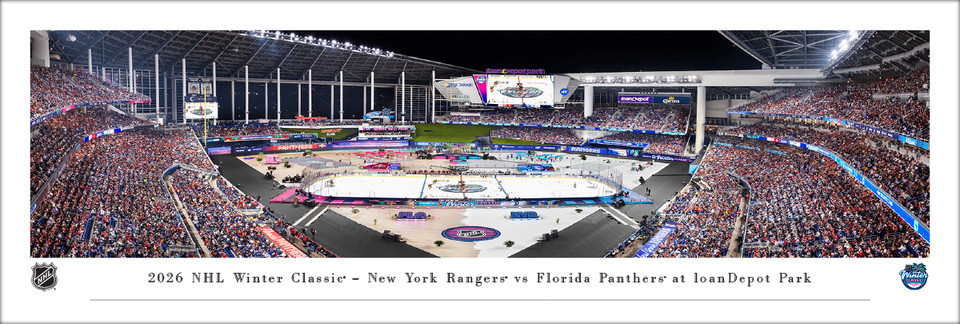
While it has never hosted any World Series games, loanDepot Park has hosted several premier events including the 2017 MLB All-Star Game, 2023 and 2026 World Baseball Classic championship games and the 2026 NHL Winter Classic hockey game between the New York Rangers and Florida Panthers.
loanDepot Park Pictures