Baseball in the nation’s capital has a rich and storied history, marked by three different ballclubs and five ballparks spanning over a century. Professional baseball in Washington, D.C., began in 1901 when the Washington Senators became charter members of the American League. The Senators played at two ballparks known as American League Park from 1901 to 1910 before moving to Griffith Stadium, which served as their home from 1911 through the 1960 season. The following year, the Senators relocated to Minneapolis, becoming the Minnesota Twins. In 1962, Washington was granted an expansion franchise, which also adopted the name Washington Senators. This team played at the newly built, multipurpose RFK Stadium for a decade. However, due to a lack of support, they moved to Arlington, Texas, in 1971, becoming the Texas Rangers. For over three decades, Washington, D.C., remained without a professional baseball team. During the 1990s, several MLB teams, including the Houston Astros, used Washington as leverage to secure new ballparks in their home cities.
Meanwhile, the Montreal Expos faced challenges of their own. Throughout the 1990s and early 2000s, they struggled to attract fans to Olympic Stadium and were unable to secure a new ballpark. By 2000, it became evident the Expos would leave Montreal. Washington, D.C., emerged as a logical destination, being one of the largest U.S. cities without a baseball team and a market capable of supporting one. In September 2004, MLB announced the relocation of the Expos to Washington, D.C. The team was renamed the Washington Nationals and began playing at RFK Stadium in April 2005.
| MEMORABLE MOMENTS AT NATIONALS PARK |
|
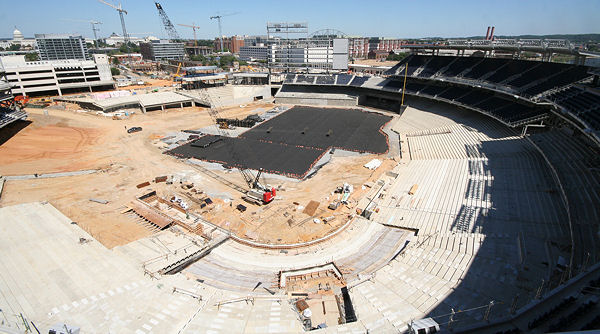
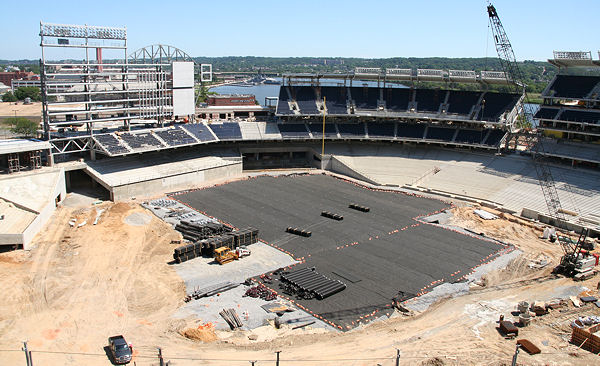
RFK Stadium, originally built in 1961, was a multipurpose facility lacking the modern amenities of newer ballparks. Part of the agreement to relocate the Expos to Washington included a commitment from the city to build a new stadium. However, financing the ballpark sparked heated political debates. After extensive negotiations, city officials and MLB reached a deal allowing public funding for the project. Construction began in Spring 2006 on a site in southeast Washington, bordered by South Capitol Street, M Street, First Street, and Potomac Avenue, along the Anacostia River. The ballpark, named Nationals Park, opened on March 30, 2008, with the Nationals playing their first game against the Atlanta Braves.
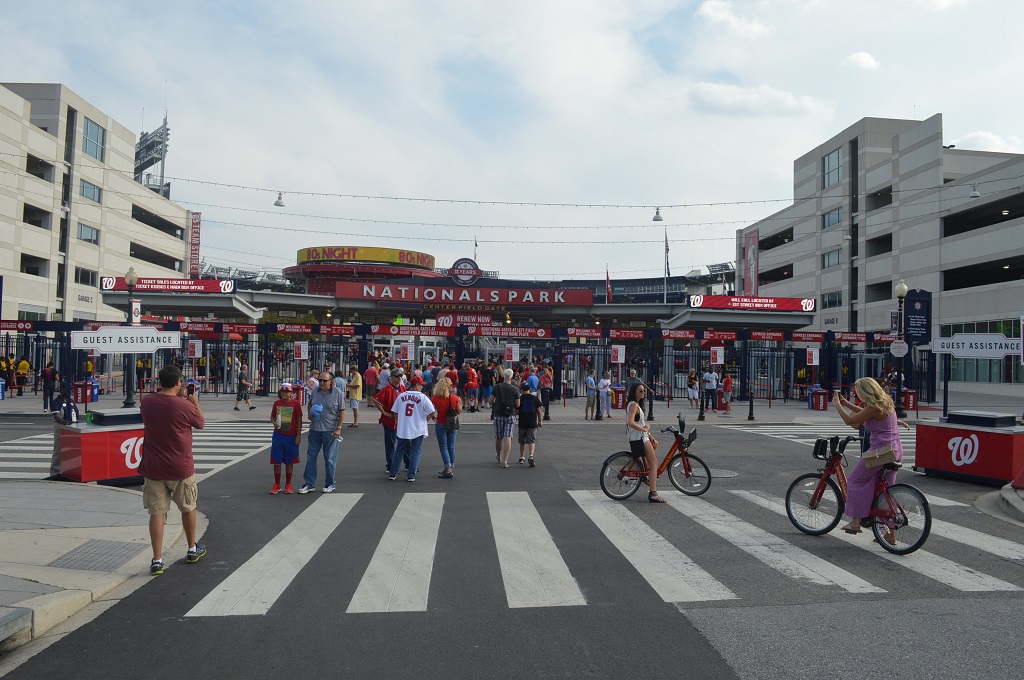
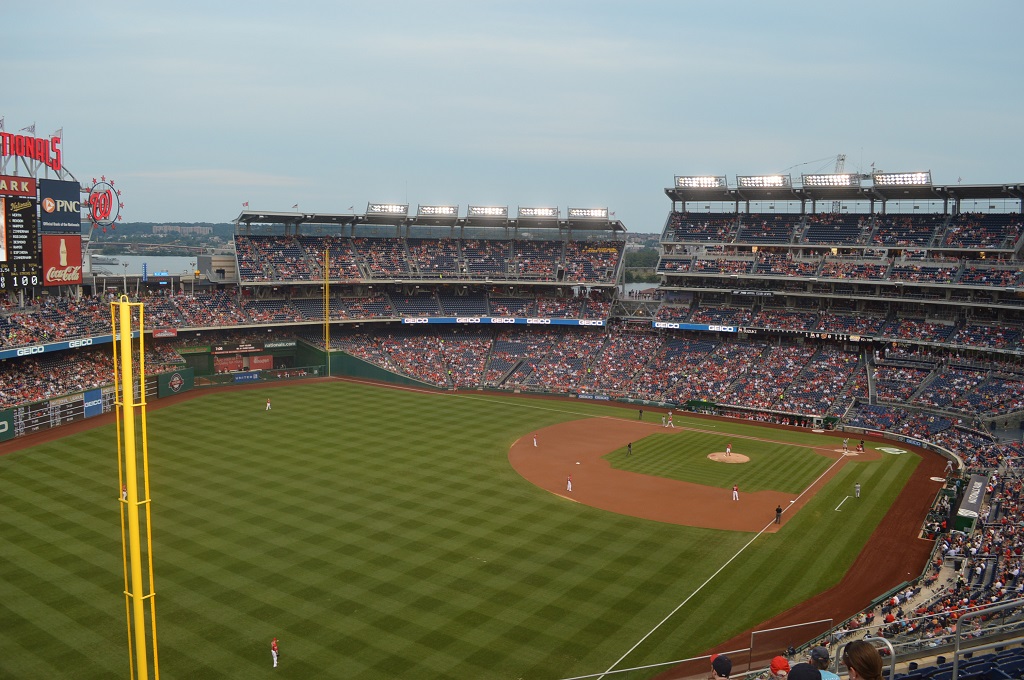
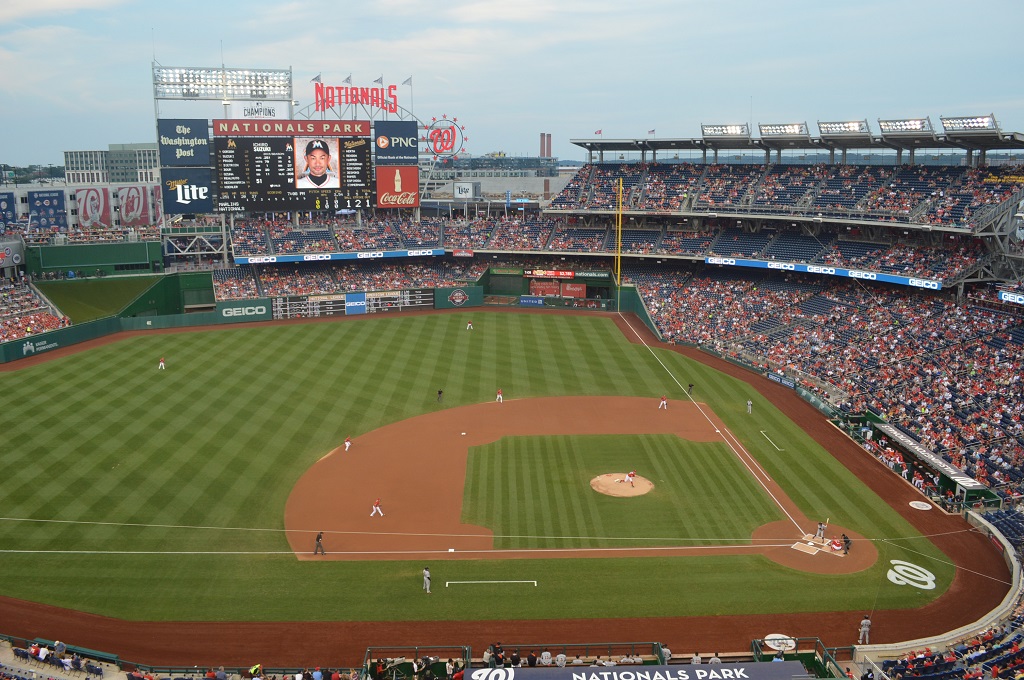
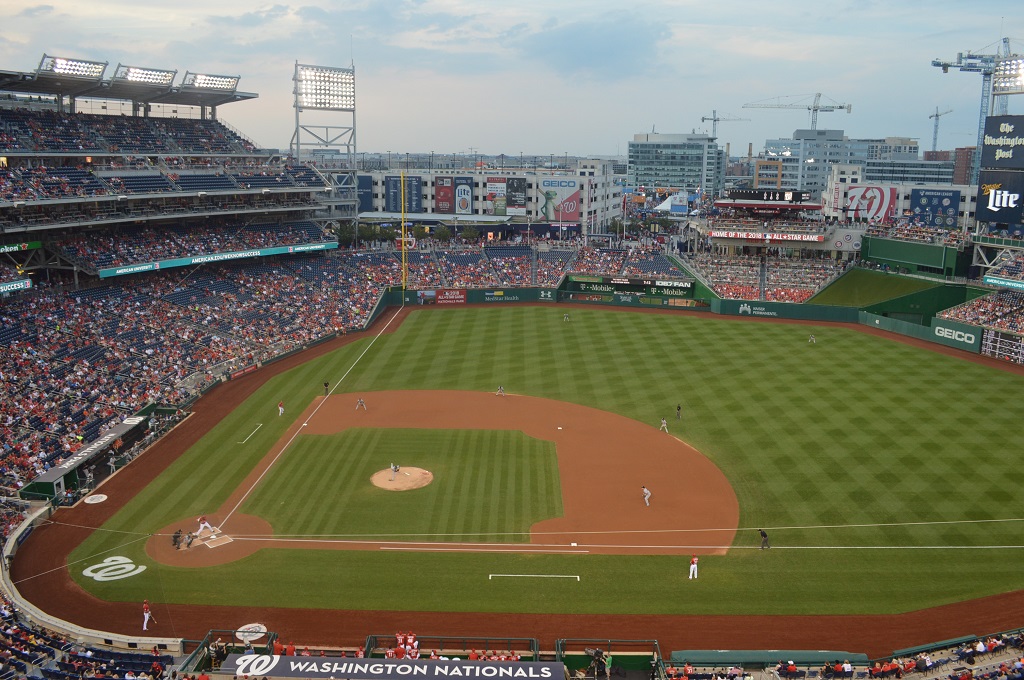
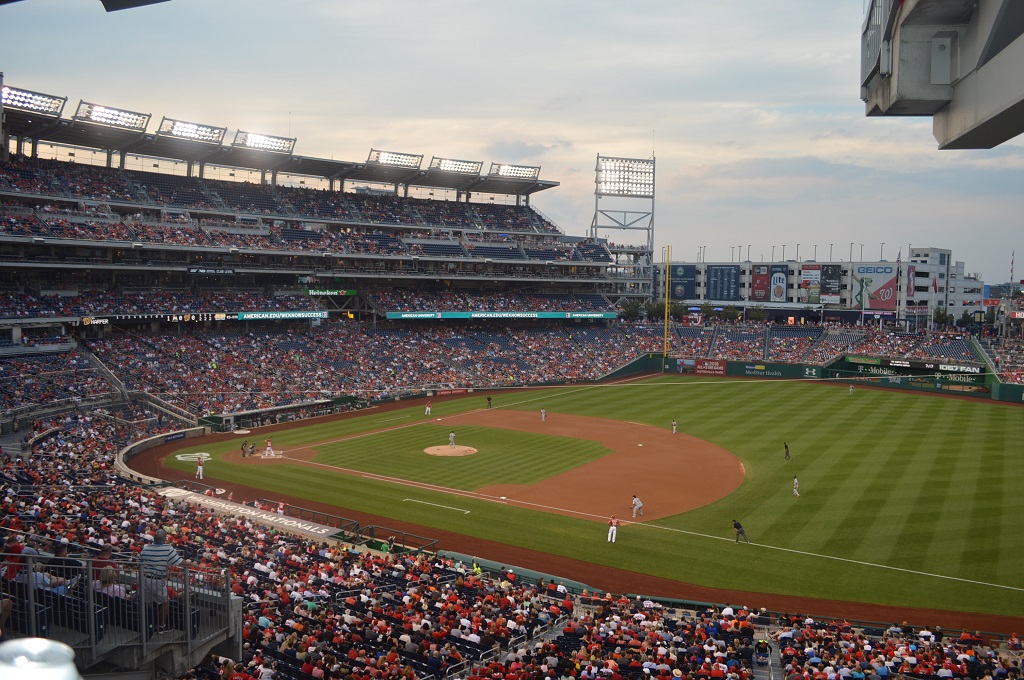
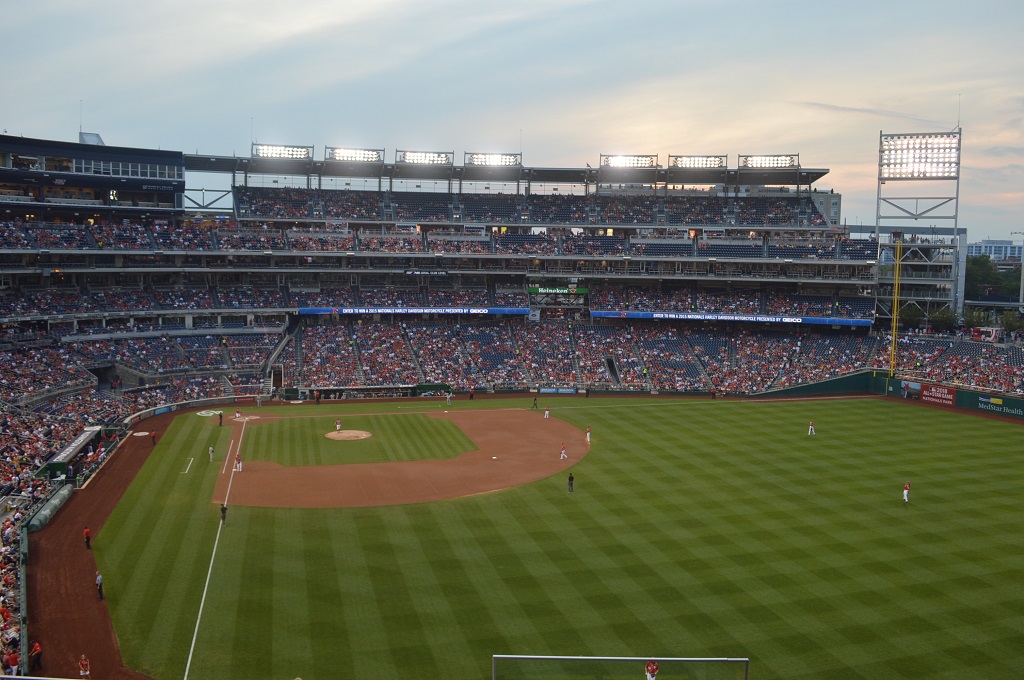
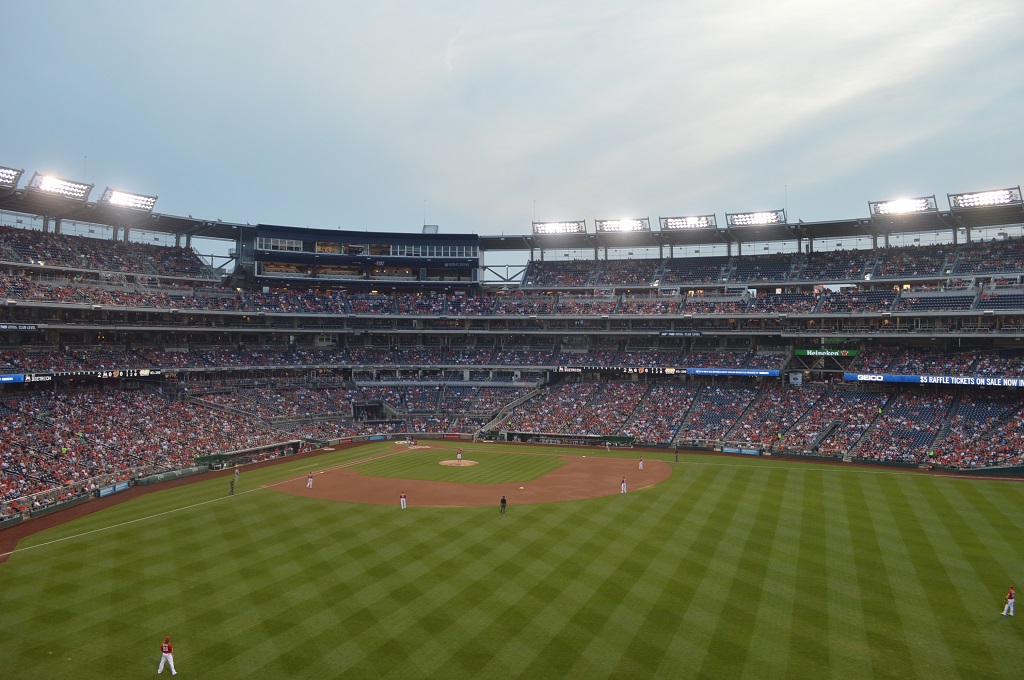
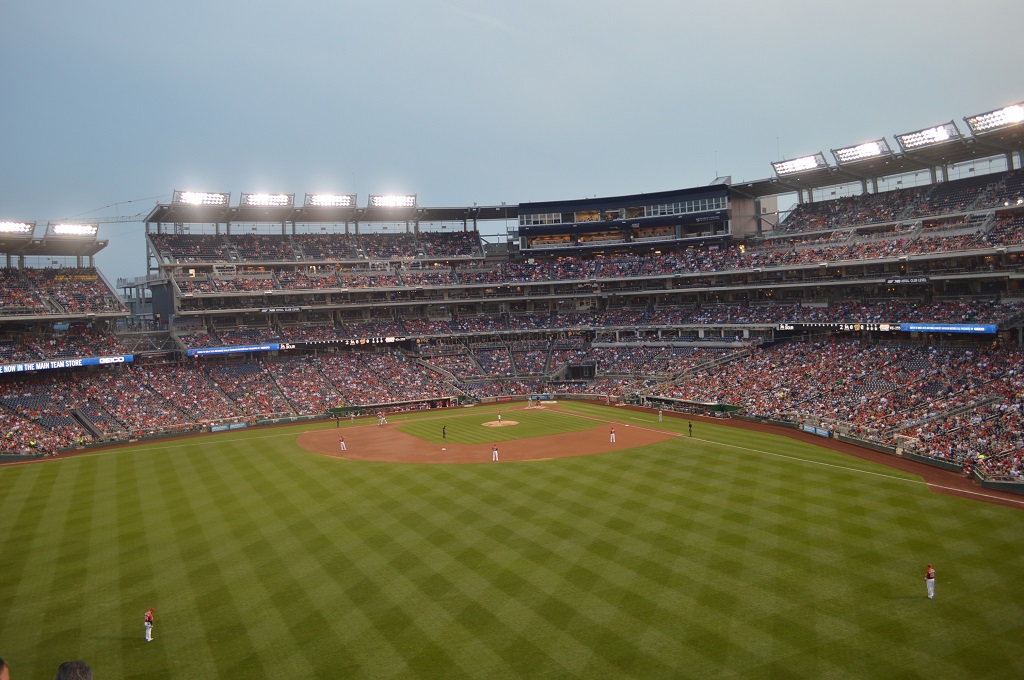
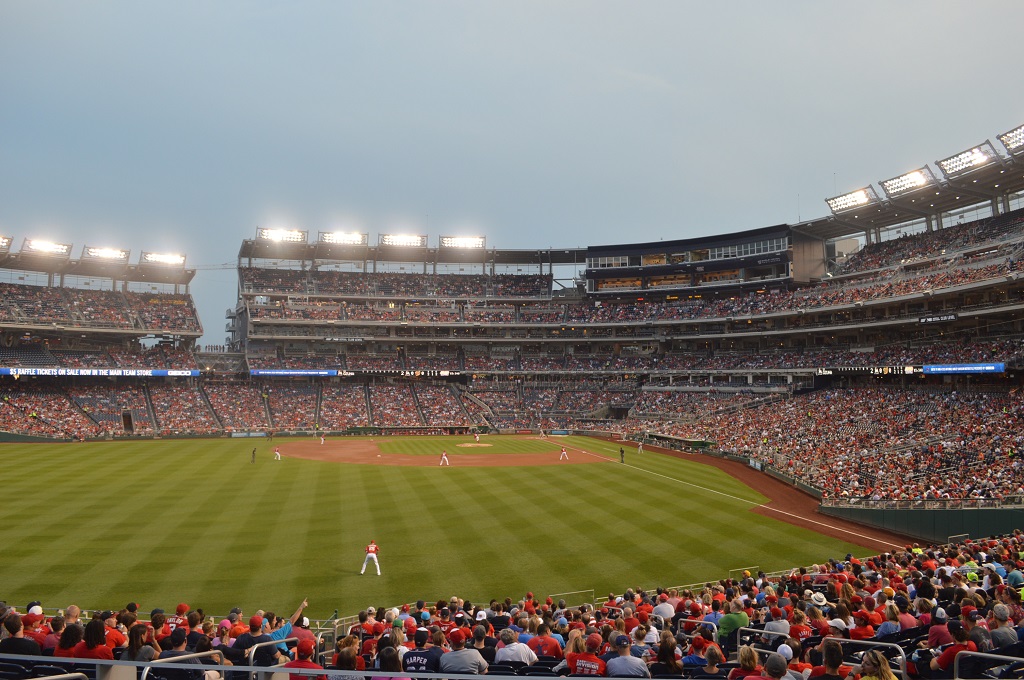
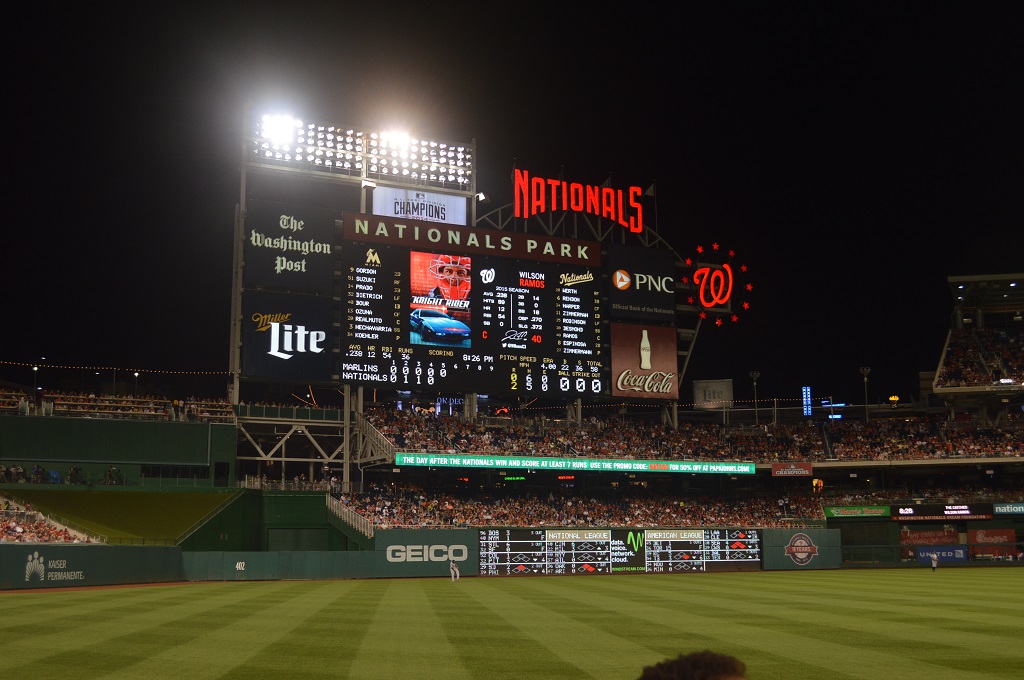
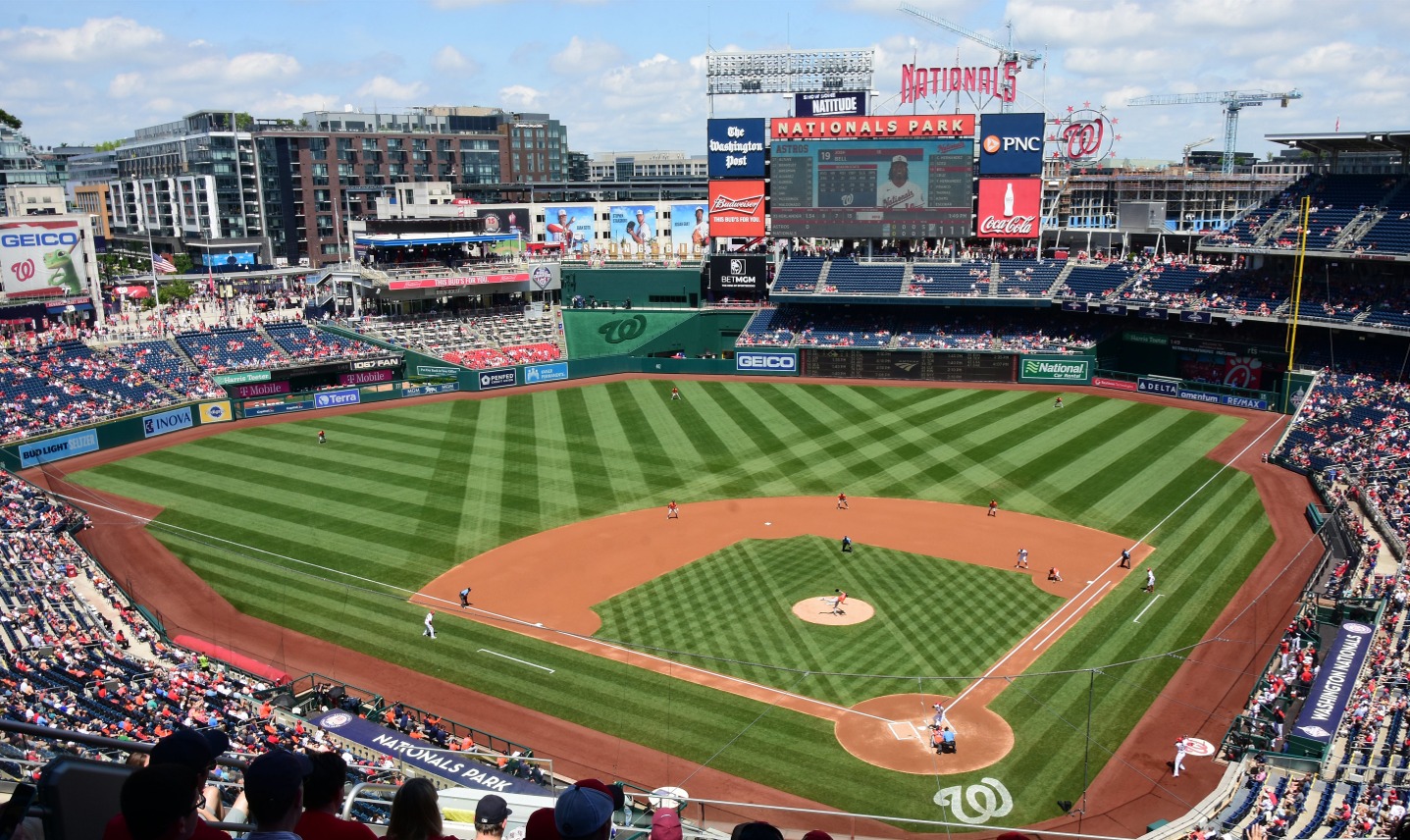
Nationals Park, the fifth ballpark in Washington’s history, stands out with its sleek, modern design featuring a predominantly glass and steel façade. Most fans enter through the outfield gates near the Navy Yard Metro station. The stadium features open concourses, escalators, and ramps for easy access to seats. With a seating capacity of 41,565, Nationals Park offers excellent sightlines throughout. Approximately 22,000 seats are located in the lower deck, which extends from the left field foul pole around home plate to the right field foul pole. The upper deck, seating 12,000, is split into two sections along the first base side, with additional seating and bleachers in the outfield.
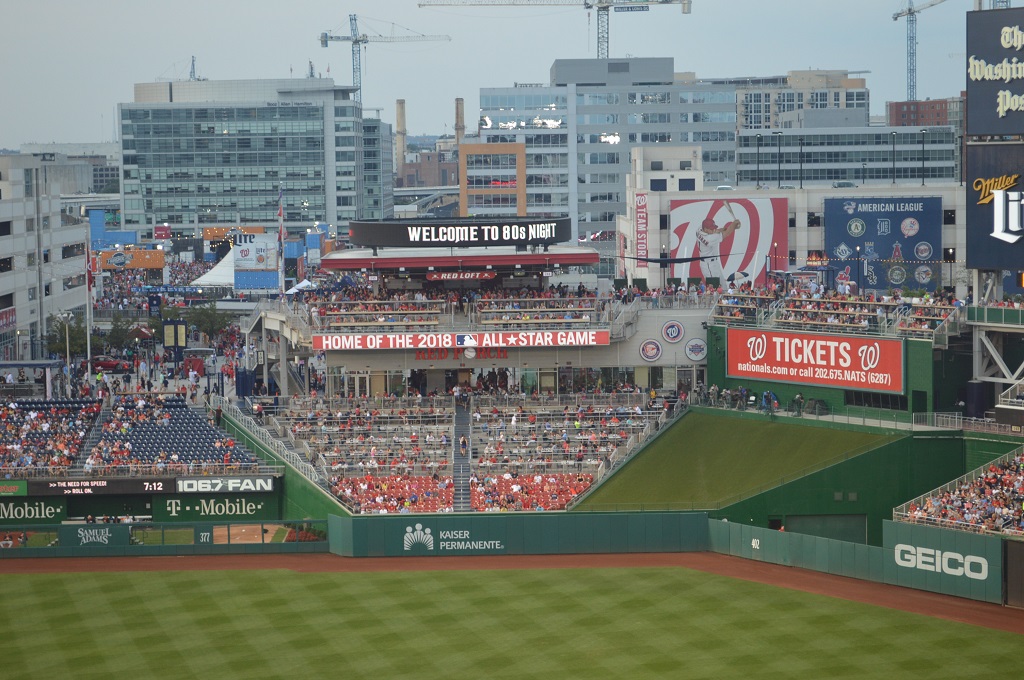
The ballpark includes numerous premium amenities. Nearly 1,800 padded luxury seats are positioned directly behind home plate, while 2,500 club seats, 1,112 suite seats, and a 500-seat Founder’s Club offer exclusive experiences. Fans can visit the PNC Diamond Club, a baseball-themed restaurant celebrating Washington’s baseball history, or the Homestead Grays Bar inside the Stars and Stripes Club, which honors Washington’s Negro League team. A kids’ play area, known as Strike Zone, features games and activities near the centerfield gate. One of the ballpark’s standout features is the Red Porch, located in centerfield beneath the Red Porch Restaurant, where fans can enjoy a unique perspective of the game. Adding to the charm, fourteen Kwanzan Japanese cherry trees, emblematic of Washington, line the centerfield plaza and left field concourse.
Since its opening, Nationals Park has hosted numerous significant events, including playoff games, the 2015 NHL Winter Classic, the 2018 MLB All-Star Game, and the 2019 World Series. With its modern design and strong ties to the city’s baseball heritage, Nationals Park continues to be a centerpiece of the sport in Washington, D.C.
Nationals Park Pictures