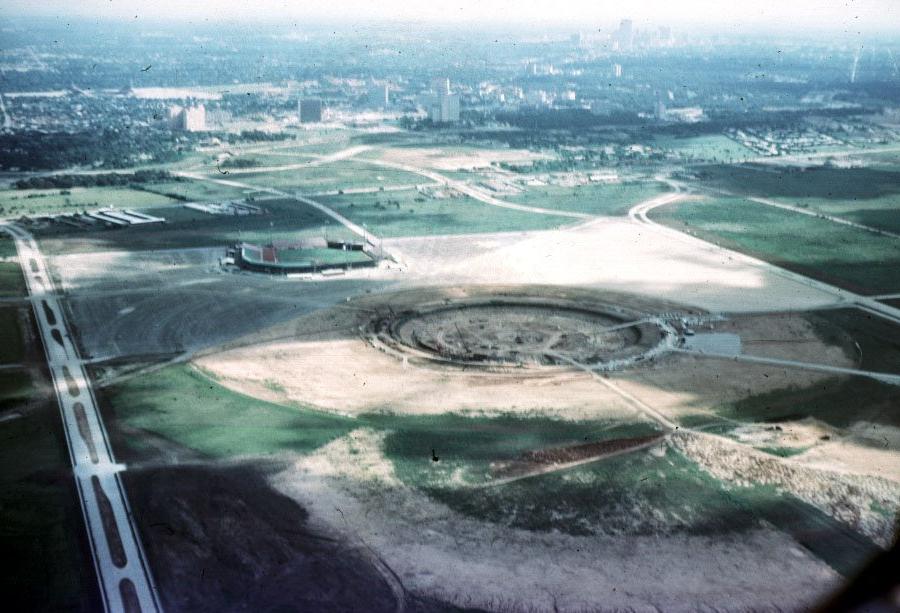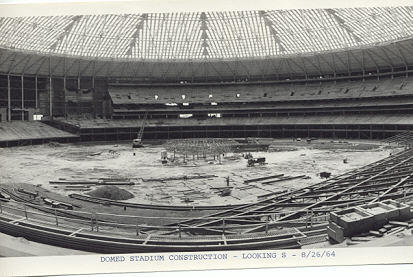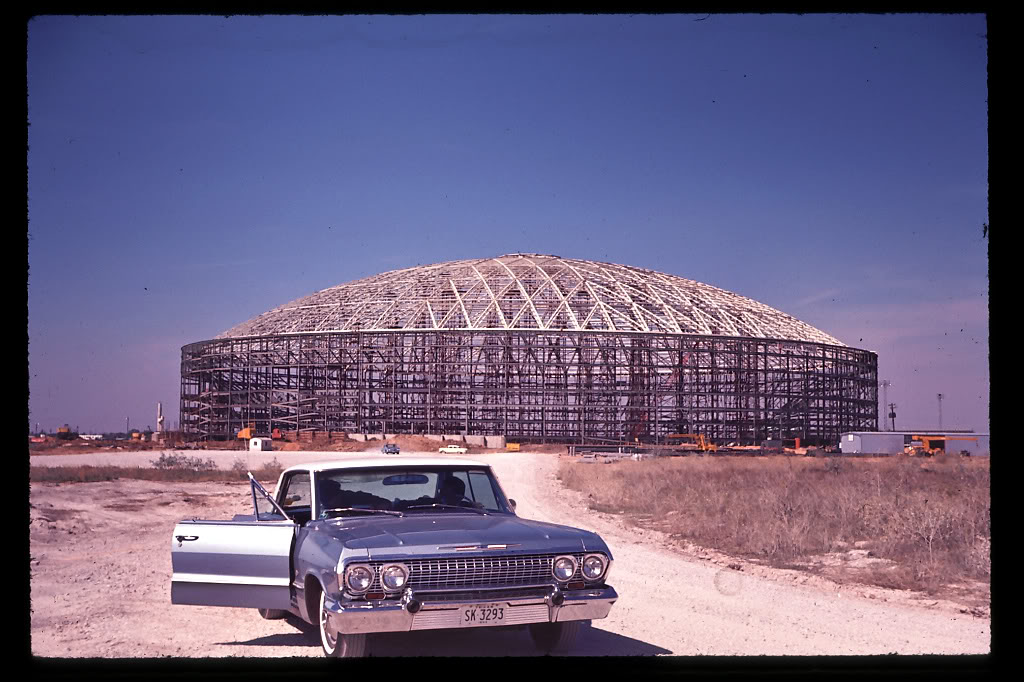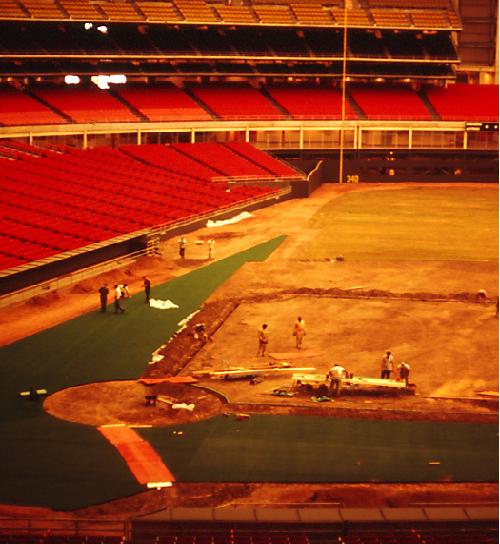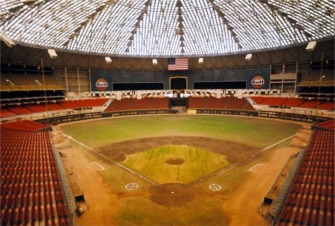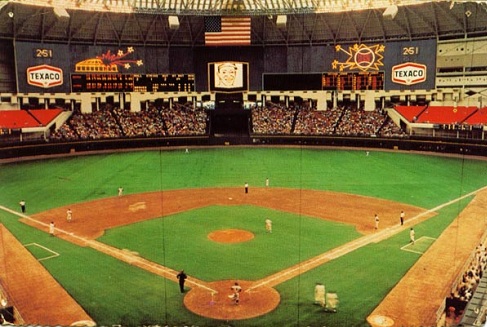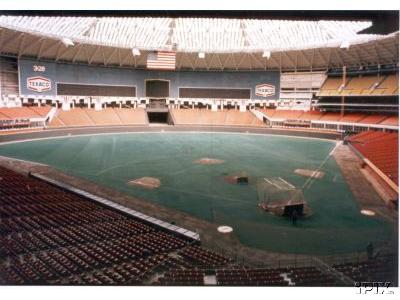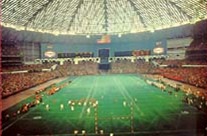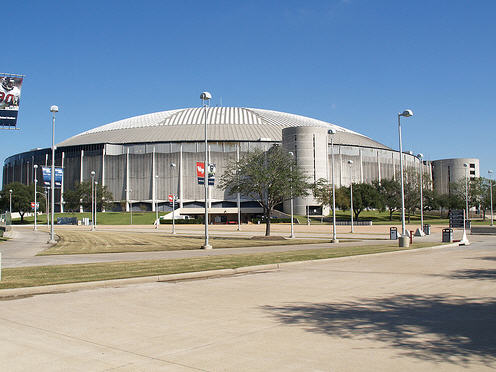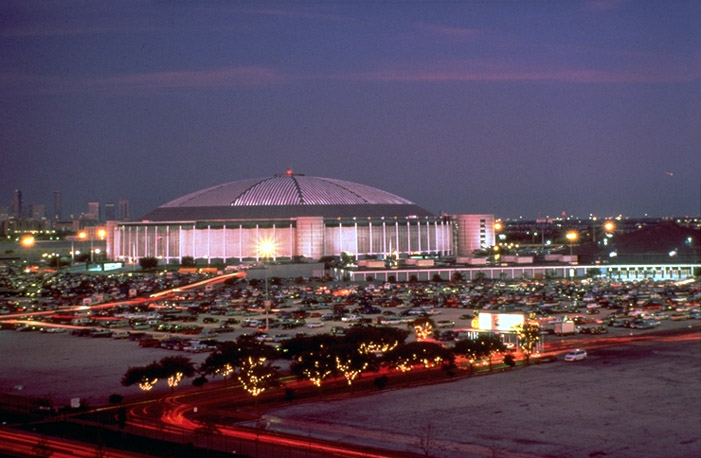
Known as the “Eighth Wonder of the World,” the Astrodome revolutionized sports stadium design and served as the home of the Houston Astros for more than three decades. Long before Major League Baseball awarded Houston an expansion franchise, local visionary Judge Roy Hofheinz was already championing the idea of a domed stadium. In 1960, he unveiled a scale model of the proposed facility to National League owners as part of Houston’s bid to secure a professional franchise. The effort proved successful. On October 17, 1960, Houston was awarded a Major League Baseball franchise, and voters subsequently approved an $18 million bond issue to finance construction of the stadium. Groundbreaking took place on January 3, 1962. While the new stadium was being built, the Houston Colt .45s began play in April 1962 at Colt Stadium, which was built just for the team adjacent to where the Astrodome was built. After three seasons in the outdoor ballpark, the franchise moved into its new home. Originally known as Harris County Domed Stadium, the venue was renamed the Astrodome when the Colt .45s adopted their new identity as the Houston Astros.
| MEMORABLE MOMENTS AT THE ASTRODOME |
|
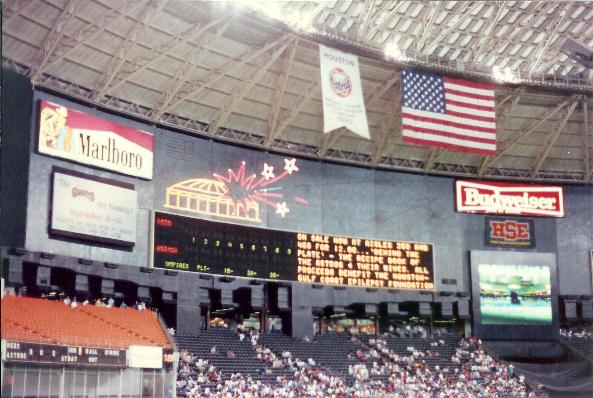
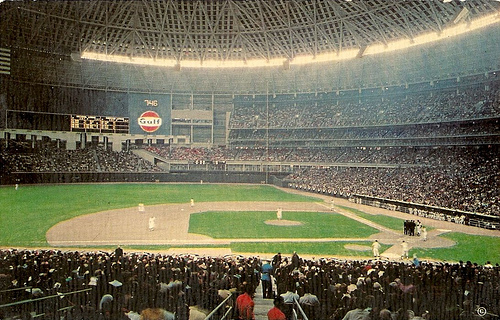
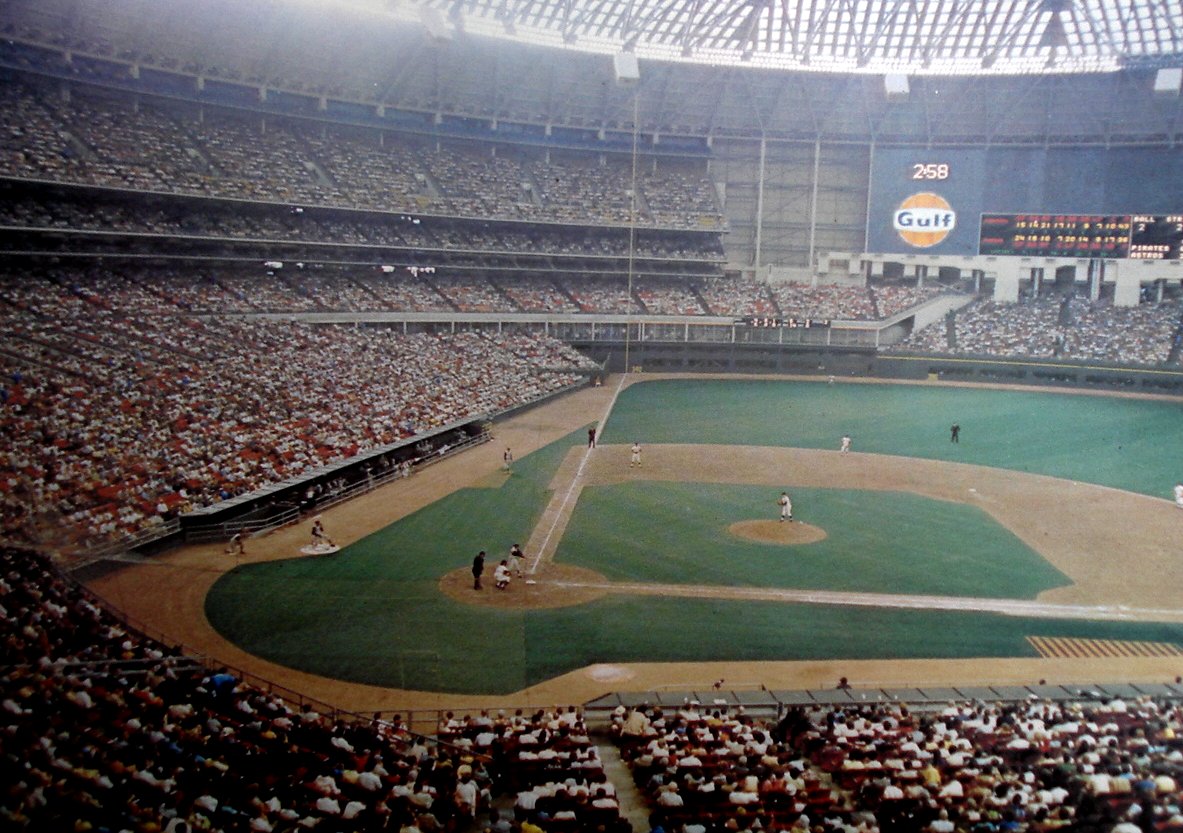
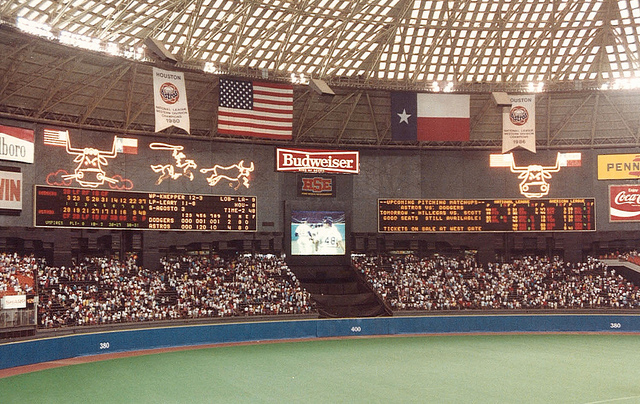
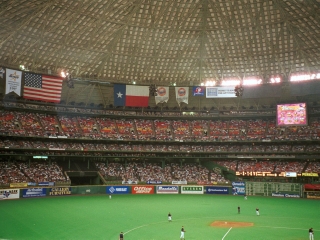
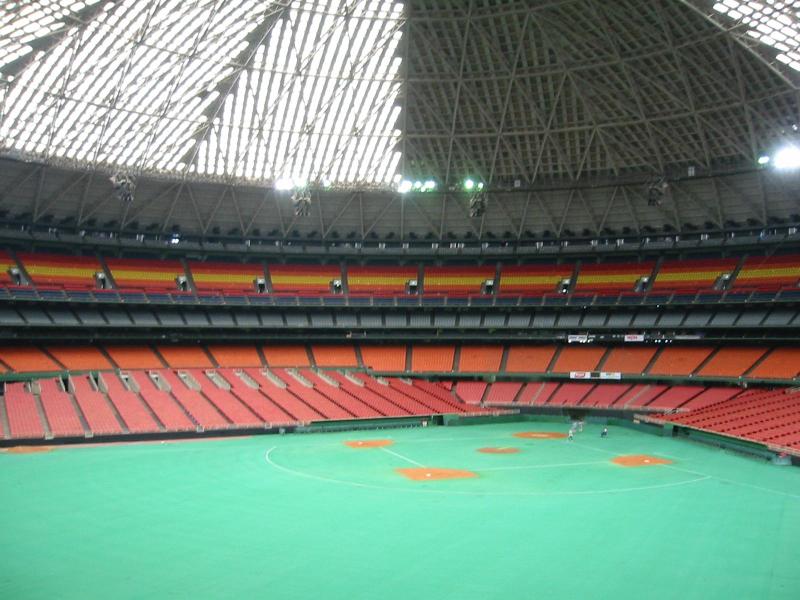
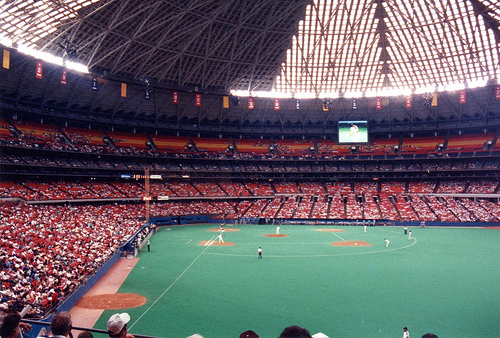
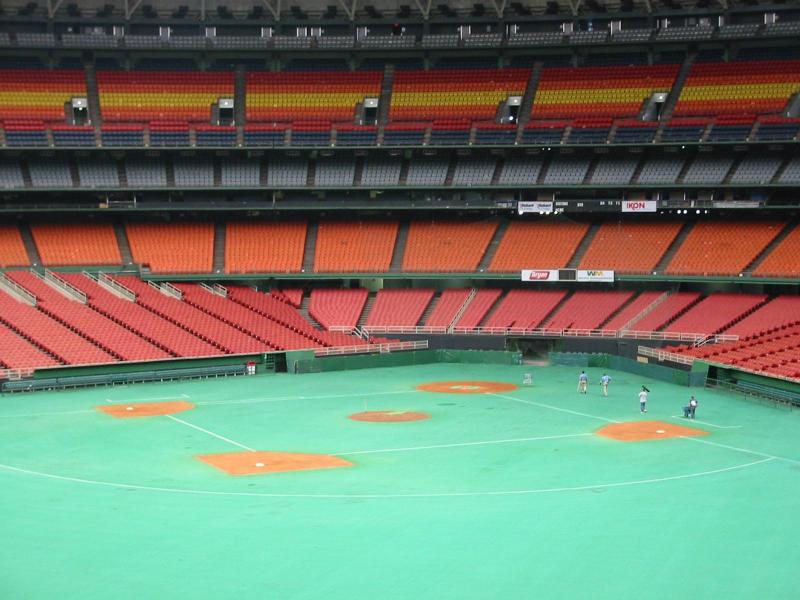
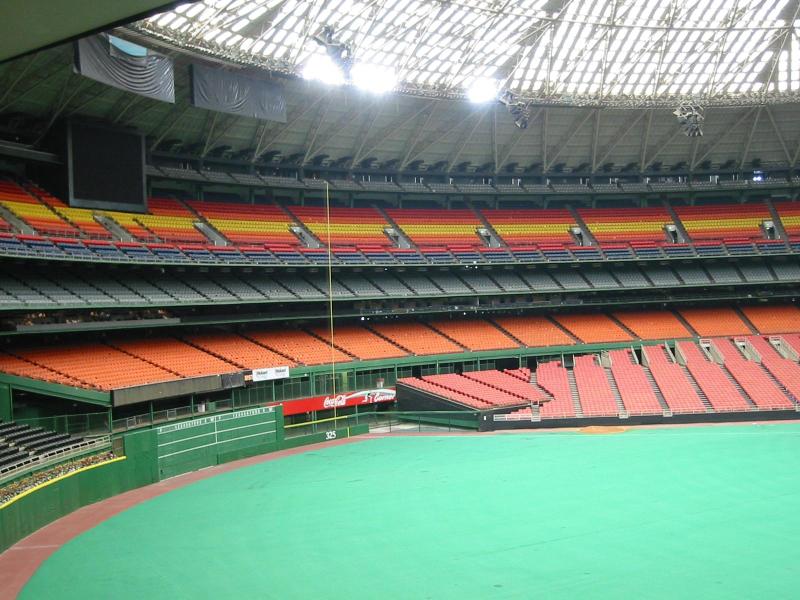
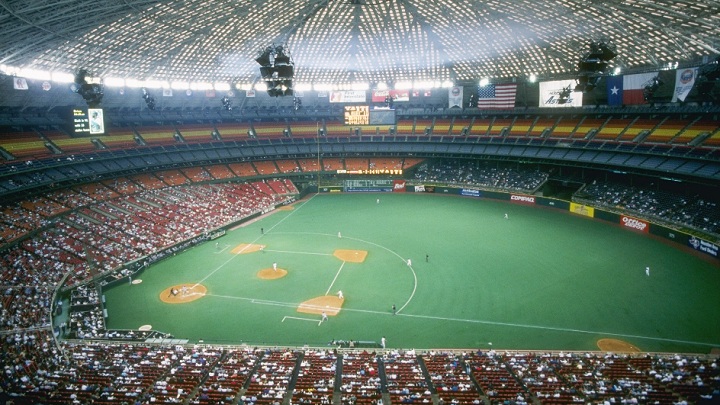
The first baseball game played in the Astrodome was an exhibition contest against the New York Yankees on April 9, 1965. Three days later, on April 12, the Astros hosted the Philadelphia Phillies in the stadium’s first regular-season game. The Astrodome immediately set a new standard for sports facilities. Its six levels of multicolored seating wrapped around the field from foul pole to foul pole, while every one of its 42,217 seats was cushioned. The stadium also featured 53 luxury suites, an innovation rarely seen at the time, along with five restaurants and a massive $2 million scoreboard and animation display stretching 474 feet across the outfield.
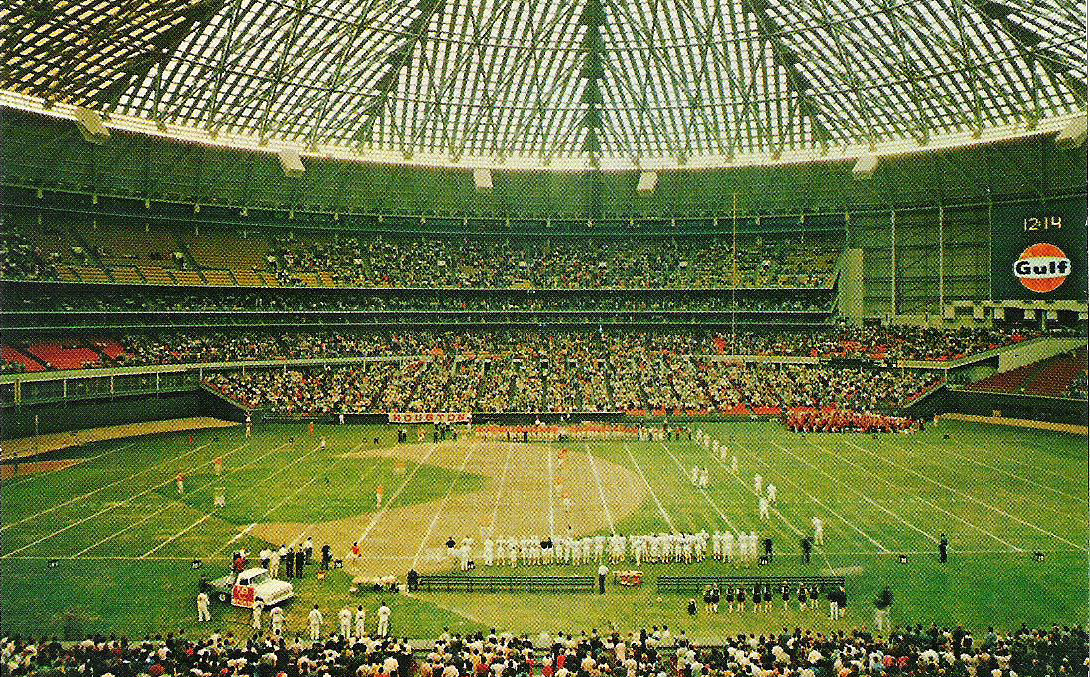
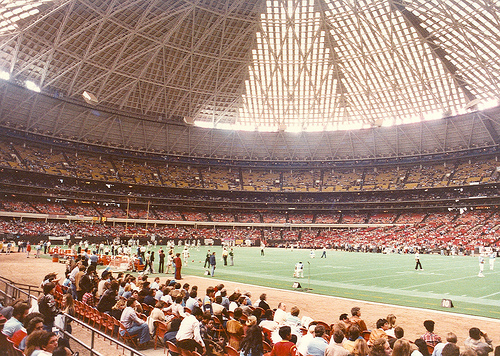
The Astrodome was designed to accommodate multiple sports and entertainment events. In addition to serving as home to the Astros, it hosted the NFL’s Houston Oilers and the University of Houston football program. To accommodate football, movable seating sections along the first and third base lines could be repositioned to create the football gridiron.
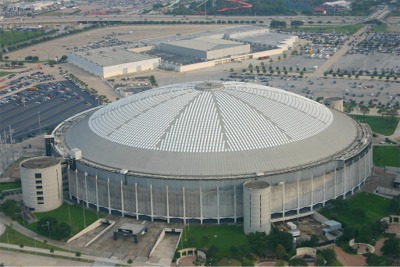
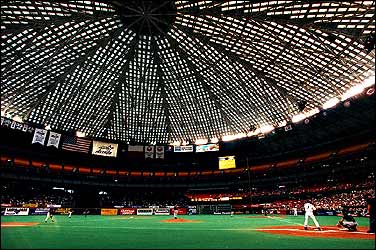
The stadium’s most innovative features was its dome, which rose 18 stories above the playing field and incorporated translucent Lucite skylights intended to provide enough sunlight for natural grass. However, the design created an unexpected challenge as outfielders struggled to track fly balls against the glare. To reduce the problem, portions of the roof panels were painted, but the reduced sunlight caused the grass to die. The solution was the development of a synthetic playing surface that would become famous worldwide: Astroturf, named after the Astros and the Astrodome itself.
For much of its history, the Astrodome remained largely unchanged. The most significant renovation came in 1989 when seating was expanded into the outfield to satisfy the Houston Oilers’ demands for additional capacity, increasing attendance to more than 54,000. The original scoreboard was replaced with modern video displays, while manual scoreboards were incorporated into the outfield walls.
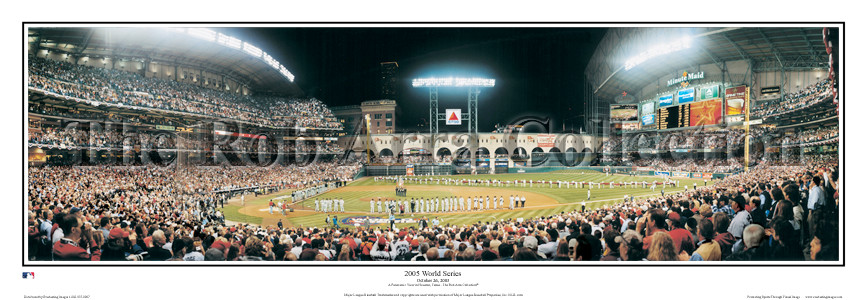
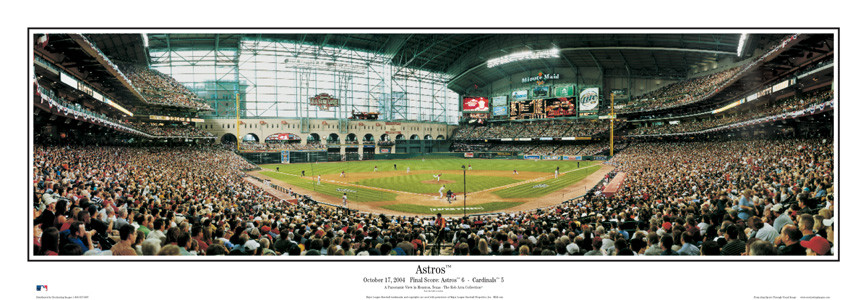
By the mid-1990s, both the Astros and Oilers were seeking newer, more modern facilities. The Oilers ultimately relocated to Tennessee following the 1996 NFL season after failing to secure funding for a new stadium. The Astros, however, received approval for a new downtown ballpark. After playing their final game in the Astrodome on October 9, 1999, the team moved into what is now known as Daiken Park in 2000.
Today, the Astrodome remains one of the most recognizable structures in sports history. Sitting adjacent to NRG Stadium, the former home of Houston baseball has stood largely unused since its closure. In 2016, much of the stadium’s interior, including nearly all seating and fixtures, was removed. Despite numerous proposals to redevelop or repurpose the iconic venue, no plan has yet come to fruition. Even today, the Astrodome remains a symbol of innovation and one of the most influential stadiums ever built.
Astrodome Pictures