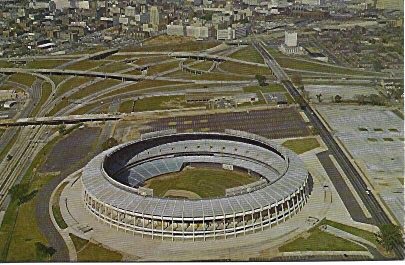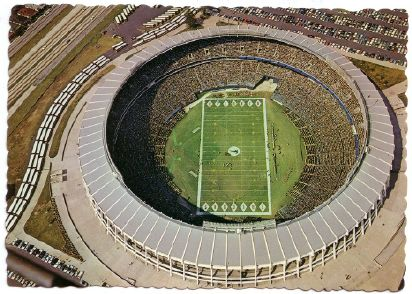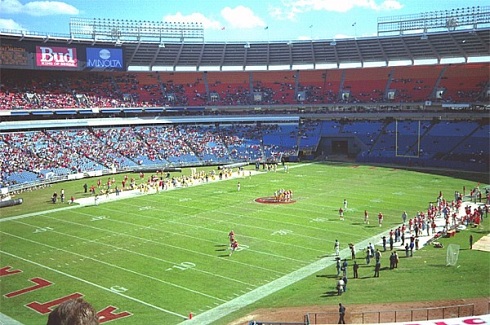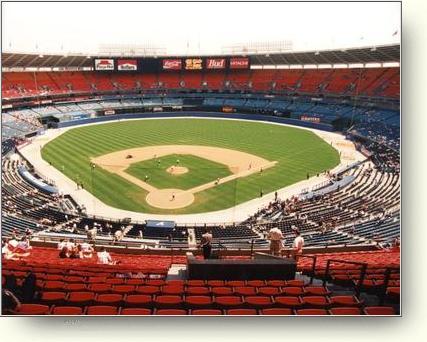
The arrival of the Atlanta Braves in 1966 elevated Atlanta into the ranks of major professional sports cities. Although the city did not yet have a major league franchise, discussions about constructing a modern stadium dated back to the 1930s. Momentum grew in the 1950s, and by 1956 serious proposals emerged for a multipurpose stadium capable of hosting both baseball and football. The American Football League expressed interest in placing a franchise in Atlanta, while Kansas City Athletics (MLB) owner Charles Finley explored relocating his team to the city if a suitable stadium were built. However, both efforts stalled due to the slow pace of stadium development. A breakthrough came in 1962 when William Bartholomay purchased the Milwaukee Braves. Facing declining attendance in Milwaukee at County Stadium, Bartholomay began exploring relocation opportunities. On March 5, 1964, the Braves announced plans to move to Atlanta provided a new stadium was completed by 1966. Construction began just six weeks later on April 15, 1964. Named Atlanta Stadium, later renamed Atlanta-Fulton County Stadium, the facility was designed as a multipurpose venue to accommodate both baseball and football, making it one of the first “cookie-cutter” stadiums built during the era
| MEMORABLE MOMENTS AT ATLANTA FULTON COUNTY STADIUM |
|
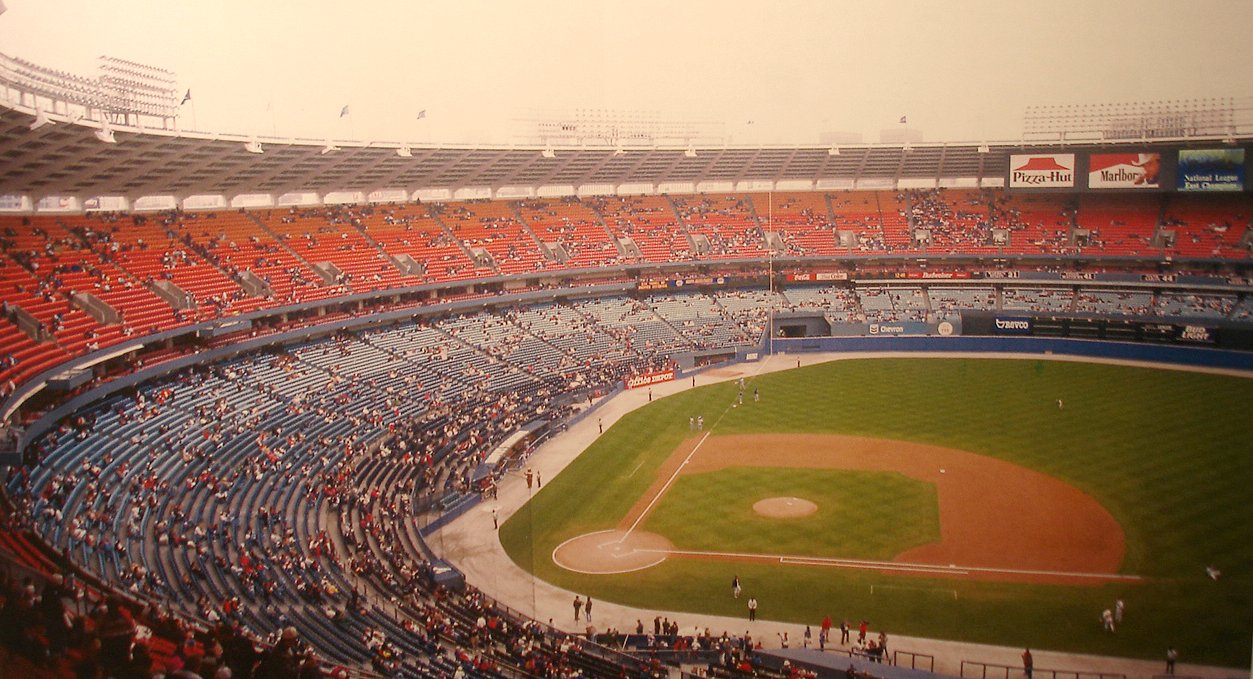
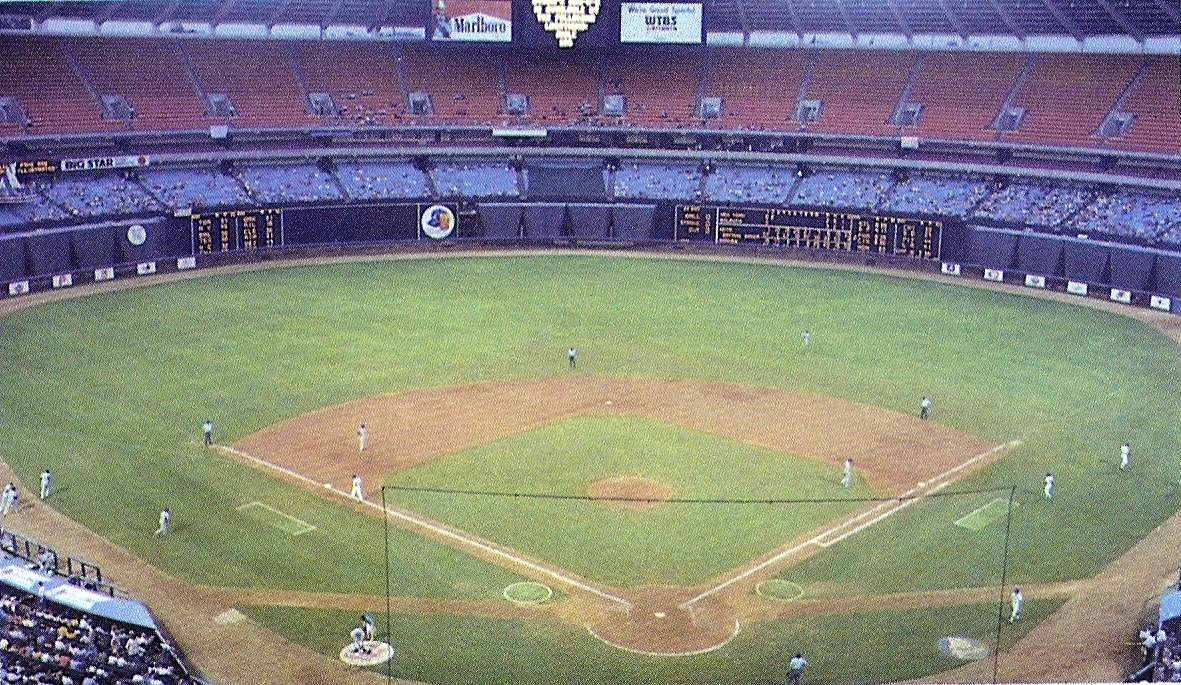
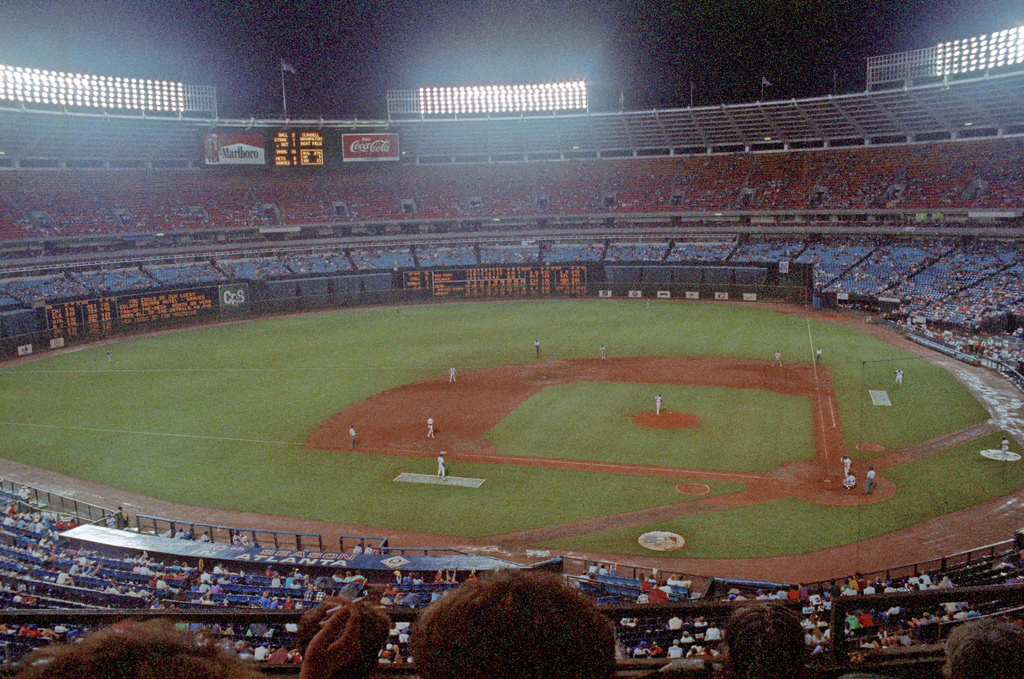
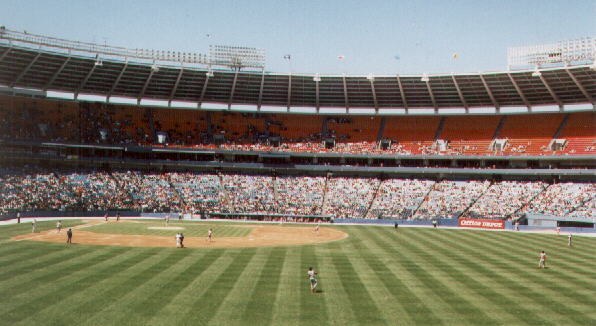
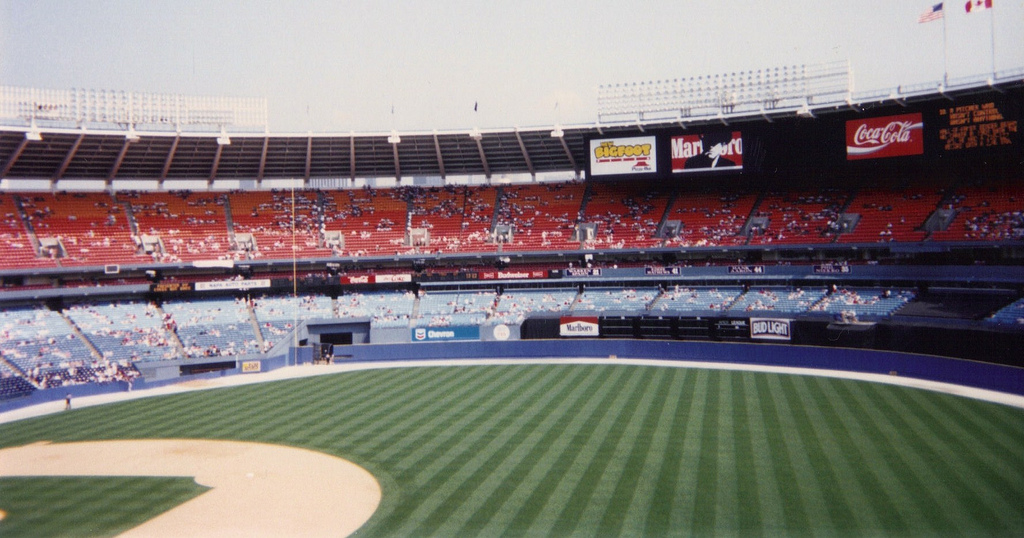
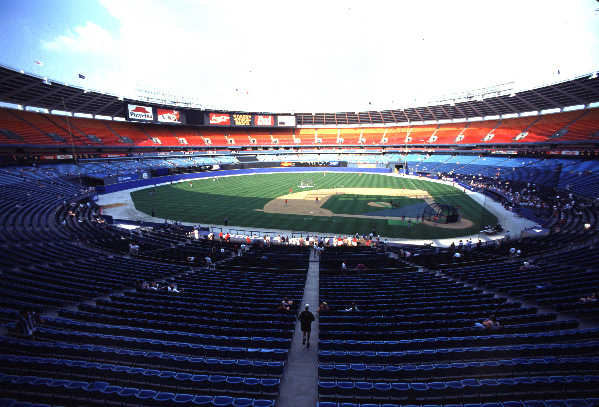
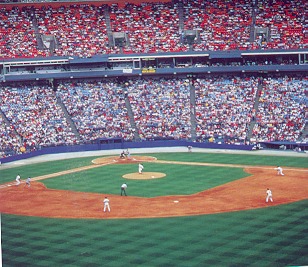
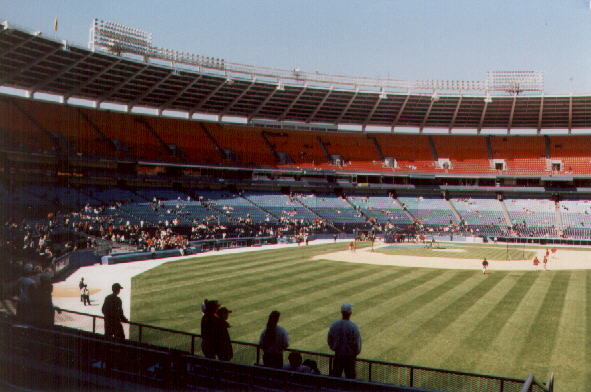
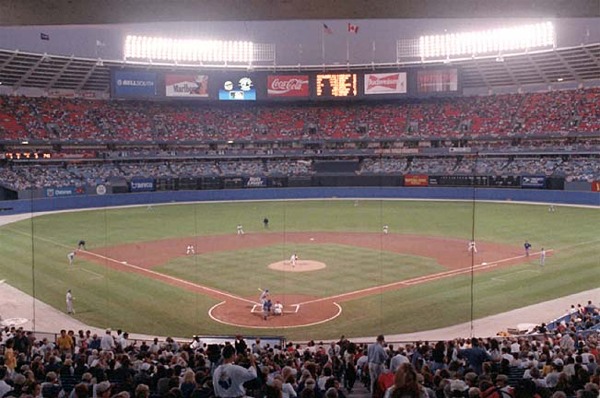
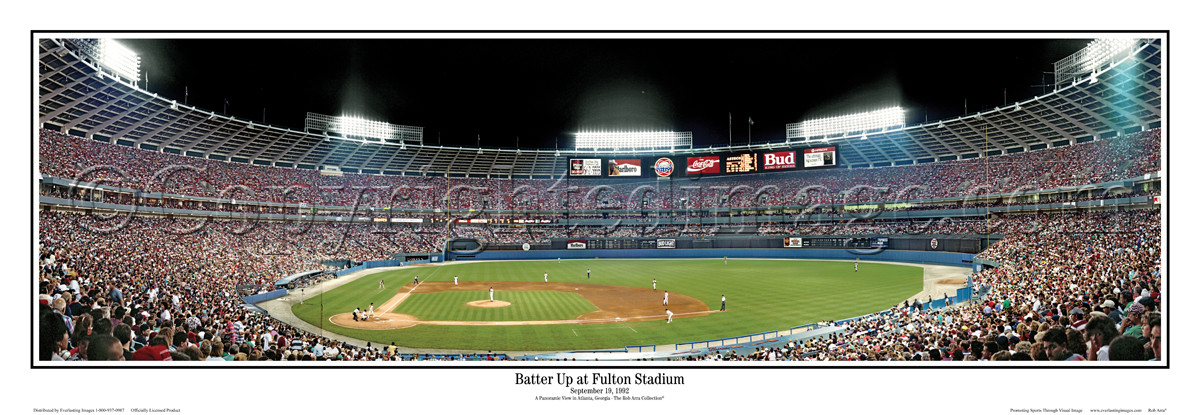
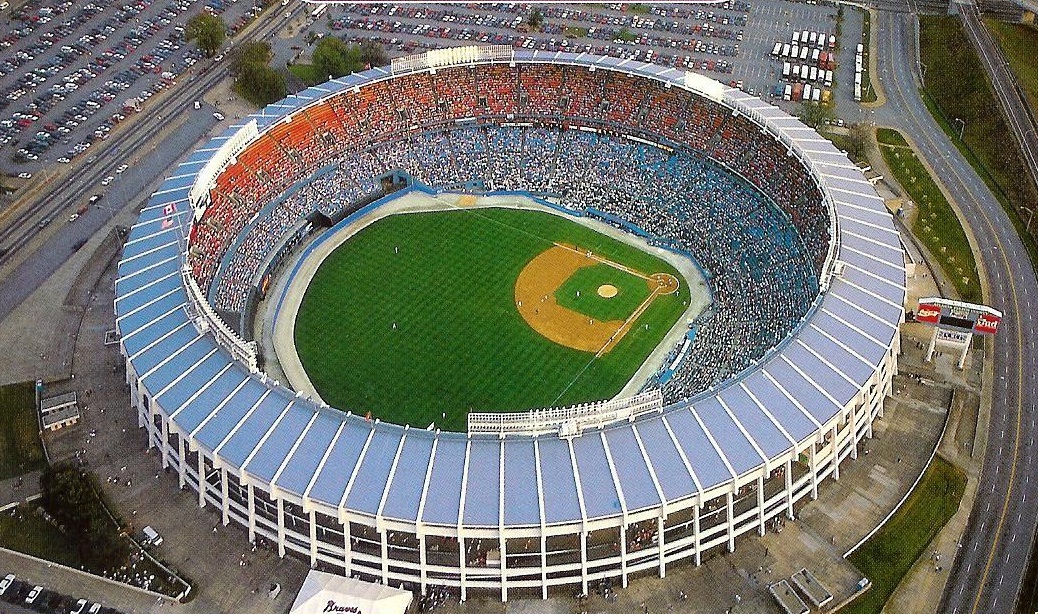
Although construction was completed in time for the 1965 baseball season, legal challenges delayed the Braves’ relocation by one year. As a result, the International League’s Atlanta Crackers played the stadium’s inaugural season in 1965. The Braves officially arrived the following year and played their first game on April 12, 1966, before a crowd of more than 51,500 fans. The stadium featured three levels of blue wooden seats that fully enclosed the playing field. Built approximately 30 feet below the surrounding parking lots, the facility accommodated more than 10,000 vehicles. Large scoreboards stood beyond the left- and right-field fences, while the multipurpose design allowed the venue to host both baseball and football. In 1966, the expansion Atlanta Falcons (NFL)also began play, sharing the stadium with the Braves.
One of the stadium’s most recognizable features debuted in 1967 when Chief Noc-A-Homa’s teepee was installed beyond the left-field fence. The attraction became a beloved part of the ballpark experience before being removed after the 1983 season. The most historic moment in the stadium’s history occurred on April 8, 1974, when Hall of Famer Hank Aaron hit his 715th career home run, surpassing Babe Ruth’s long-standing record of 714. A marker beyond the left-field wall commemorated the spot where the historic home run landed. During the 1970s, attendance challenges plagued the Braves, prompting Atlanta businessman Ted Turner to purchase the club and introduce a variety of creative promotions to attract fans. In 1977, the stadium underwent a facelift as its original wooden seats were replaced with colorful blue, orange, and red plastic seats. A new scoreboard and video display were also installed in center field beneath the stadium roof. Despite these upgrades, Atlanta-Fulton County Stadium changed little over the following two decades. By the 1980s, both the Braves and Falcons were seeking modern replacements. The stadium developed a reputation for having one of the poorest playing surfaces in professional sports, and its football configuration created subpar sightlines. Unlike other multipurpose stadiums with movable lower seating sections, Atlanta-Fulton County Stadium utilized pullout seats from the outfield areas, resulting in an oval-shaped football layout that left many fans far from the action.
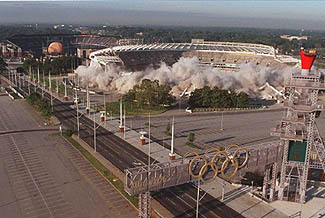
The Falcons became the first tenant to depart when they moved into the Georgia Dome in 1992. In 1990, Atlanta was awarded the 1996 Summer Olympics, leading to the construction of a new Olympic Stadium adjacent to Atlanta-Fulton County Stadium. The venue was specifically designed to be converted into a baseball-only facility following the Games. On October 24, 1996, the Braves played their final game at Atlanta-Fulton County Stadium during the World Series against the New York Yankees. The following season, the team moved into the converted Olympic venue, later known as Turner Field. On August 2, 1997, Atlanta-Fulton County Stadium was imploded, disappearing in less than 30 seconds.
For nearly 25 years, the site served primarily as parking for Turner Field. Portions of the original retaining wall remain, and the location of Hank Aaron’s historic 715th home run is permanently marked. In 2025, Georgia State University announced plans to construct a new collegiate baseball stadium on the historic site.
Atlanta Fulton County Stadium Pictures