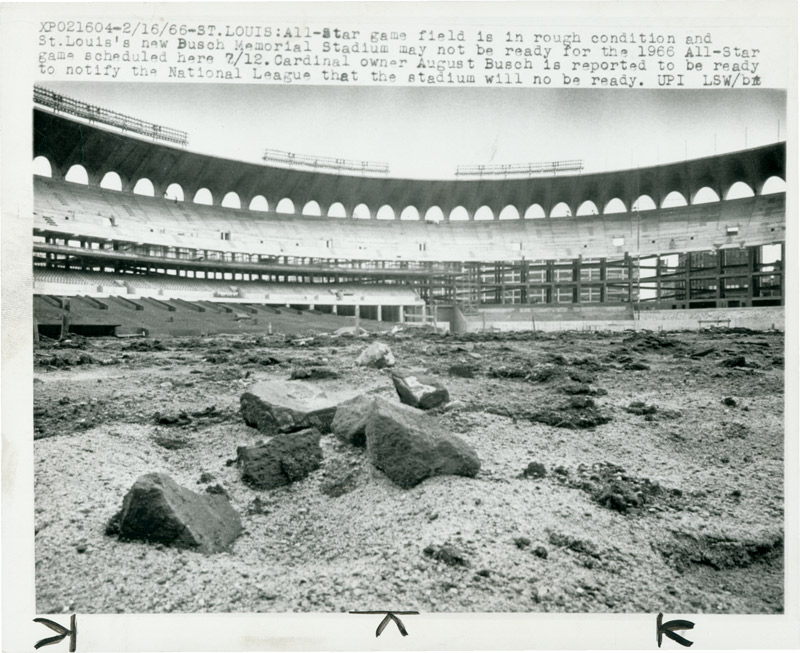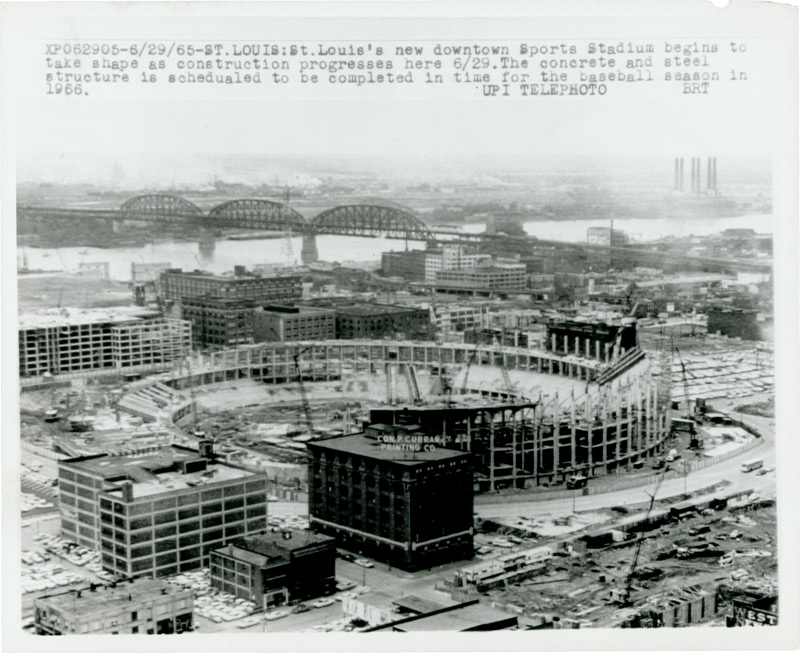
During the 1960s and early 1970s, numerous multipurpose “cookie-cutter” stadiums were built across the country. While many shared similar designs, Busch Stadium in St. Louis developed a personality all its own. By the time it closed in 2005, it had become one of baseball’s most beloved venues, cherished by generations of Cardinals fans and distinguished by features that set it apart from its contemporaries. The idea of a modern downtown sports stadium had been discussed in St. Louis for years. After spending more than four decades at Sportsman’s Park, the Cardinals sought a new home. In the early 1960s, Anheuser-Busch committed $5 million toward a $20 million stadium project, helping bring the vision to life. Ground was broken on May 24, 1964, on a 30-acre site in downtown St. Louis.
| MEMORABLE MOMENTS AT BUSCHSTADIUM |
|
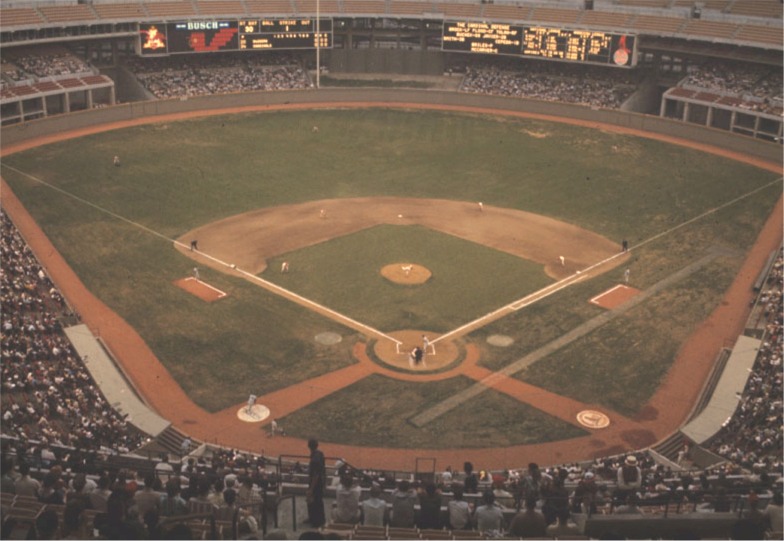
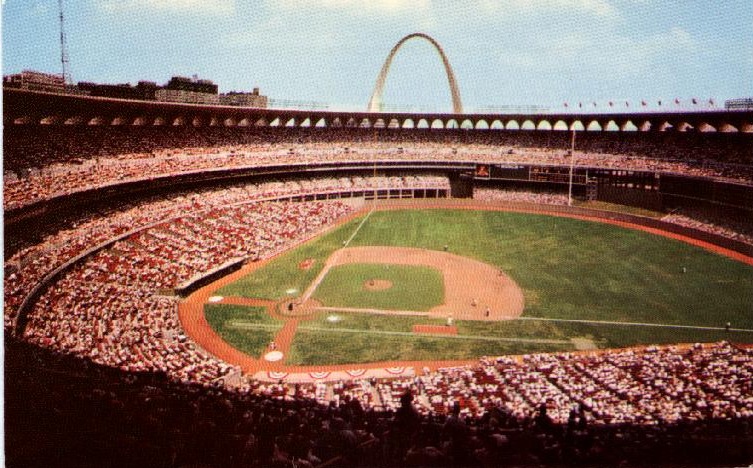
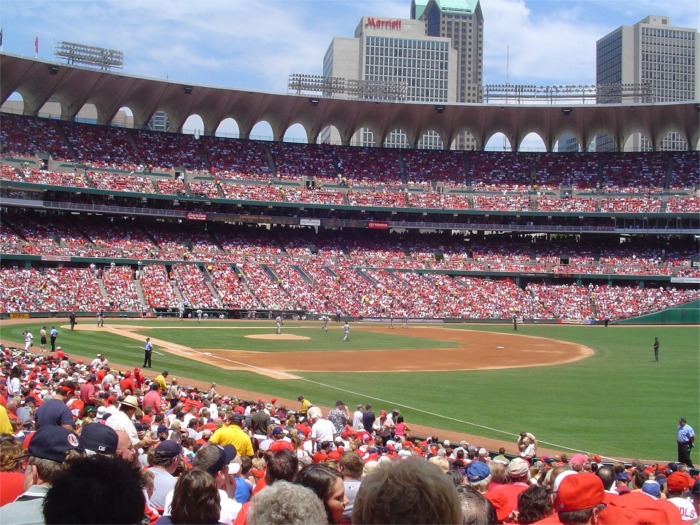
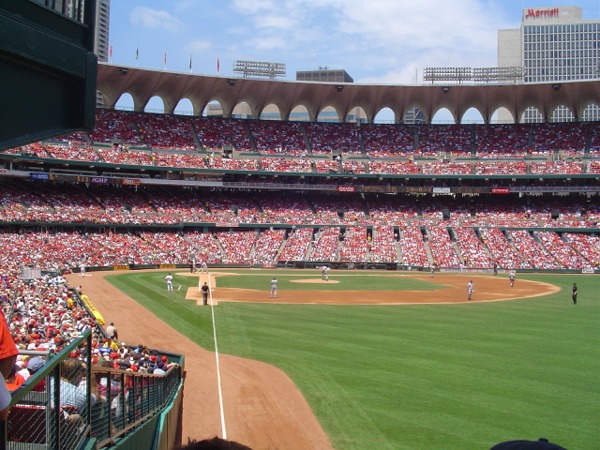
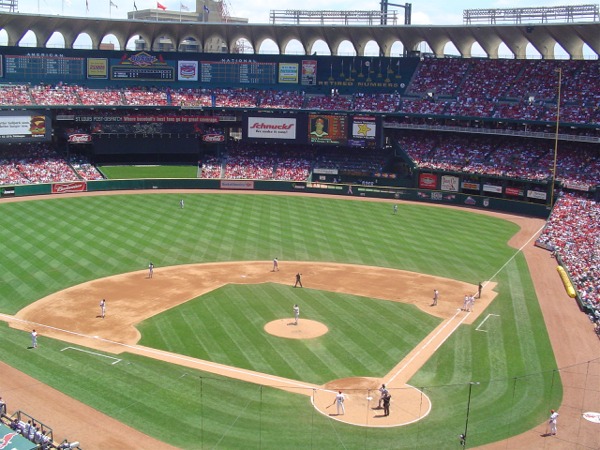
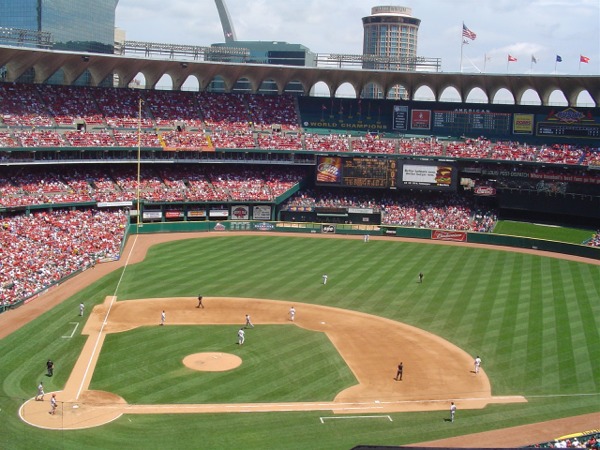
The Cardinals christened Busch Stadium on May 12, 1966. The new facility featured four levels of seating and accommodated 46,068 fans. Red seats completely encircled the natural-grass playing field, while a state-of-the-art $1.5 million scoreboard stood beyond the outfield fence. One of the scoreboard’s signature features was an electronic cardinal that chirped after Cardinals home runs, quickly becoming a fan favorite. Upon opening, Busch Stadium was widely regarded as one of the top baseball stadiums in the country.
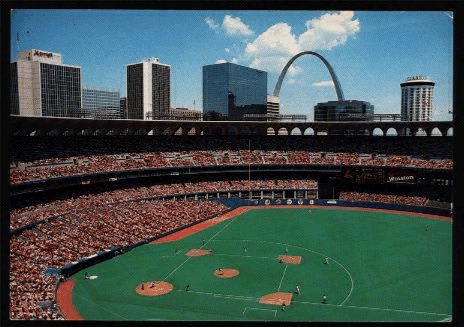
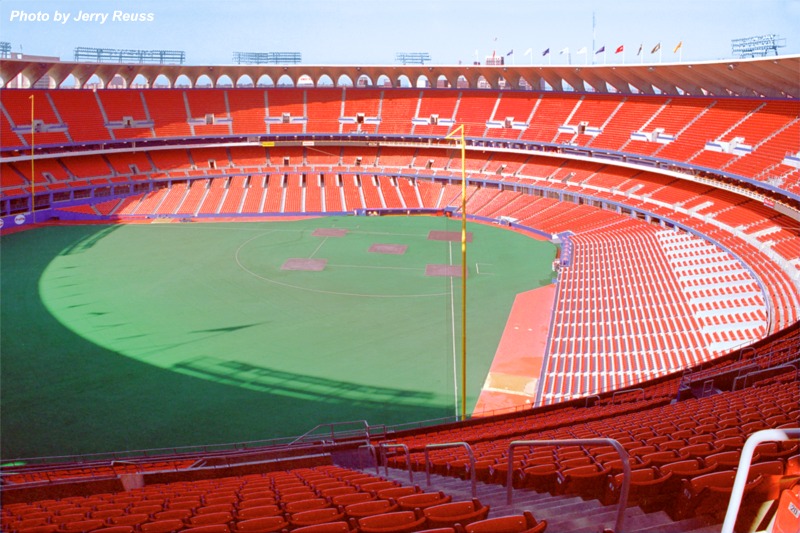
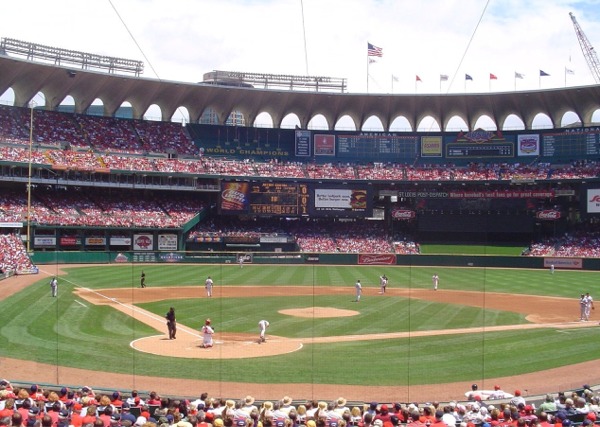
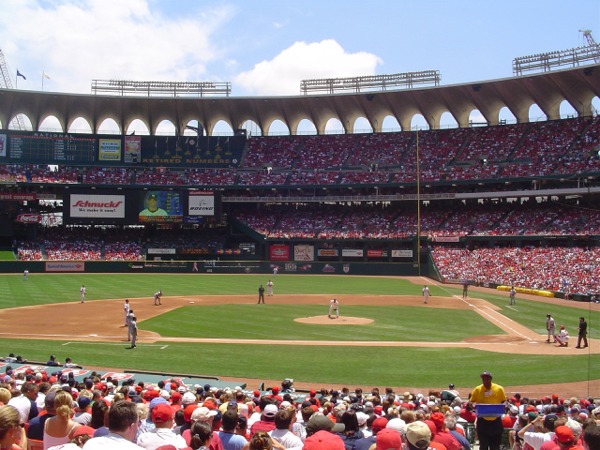
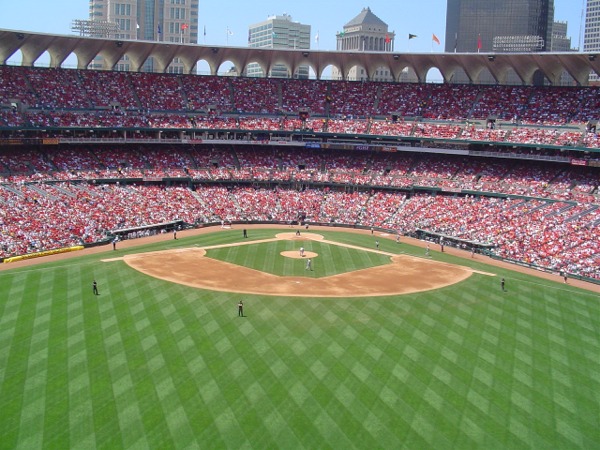
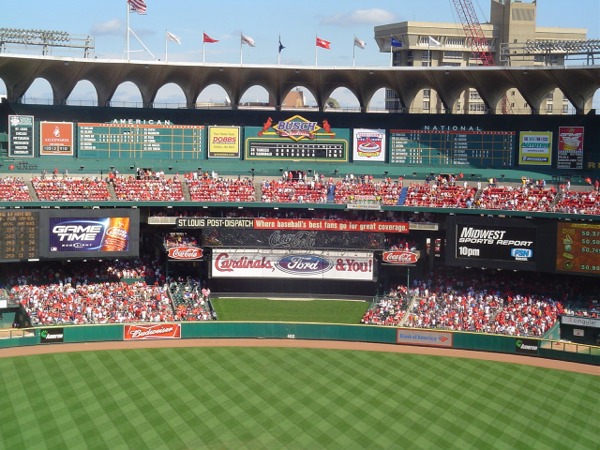
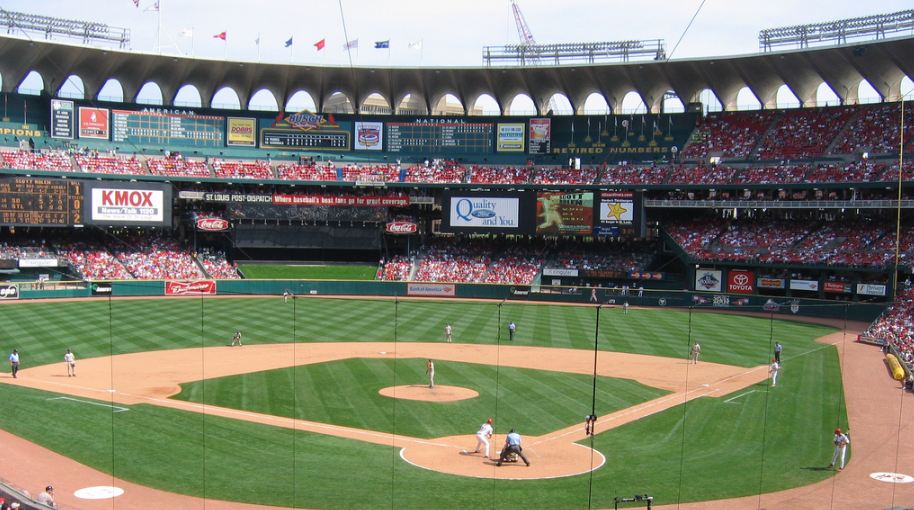
In 1970, the natural grass field was replaced with Astroturf, making it easier to transition the stadium between baseball and football configurations. For more than two decades, the stadium remained largely unchanged. Significant improvements finally occurred in 1995 once the St. Louis Rams (NFL) moved into their own stadium. New ownership invested heavily in renovations that transformed the stadium. Natural grass returned, seating was upgraded, modern scoreboards were installed, and the bullpens were relocated behind the outfield fence. The area beyond the outfield was also enhanced, creating a more attractive and fan-friendly atmosphere.
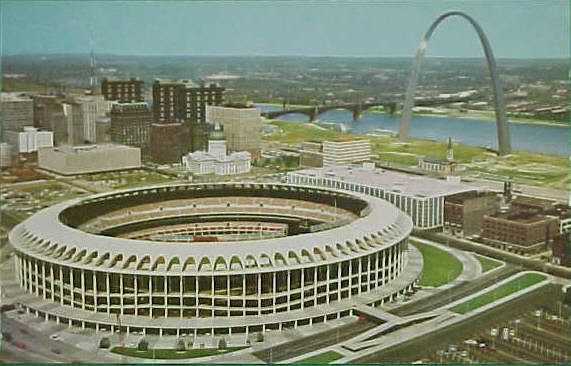
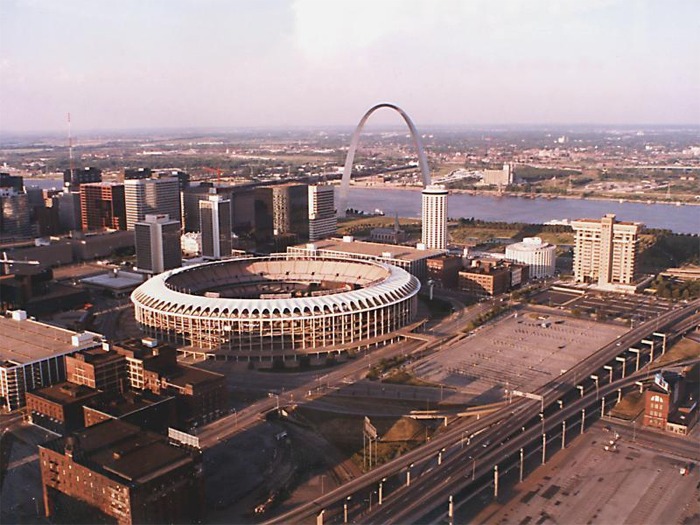
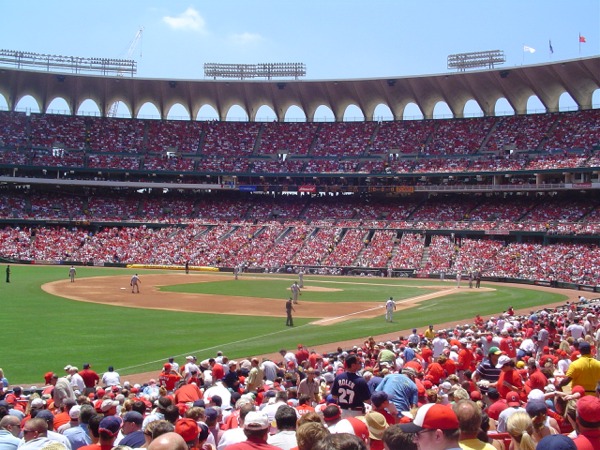
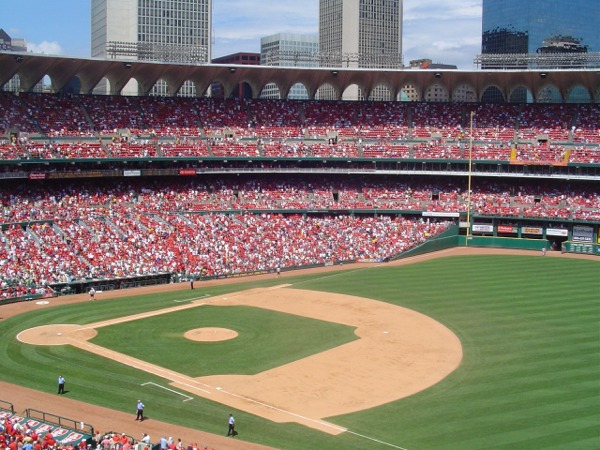
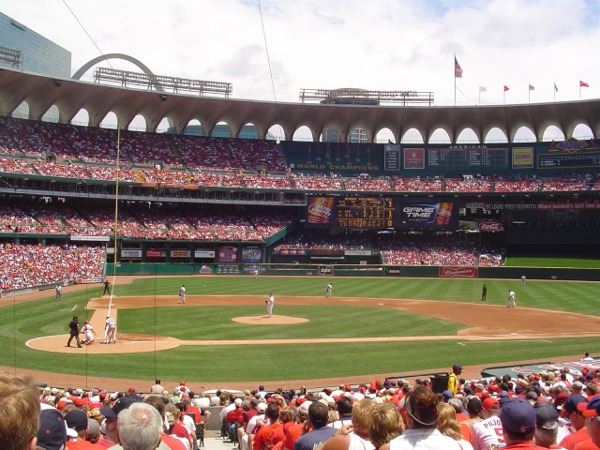
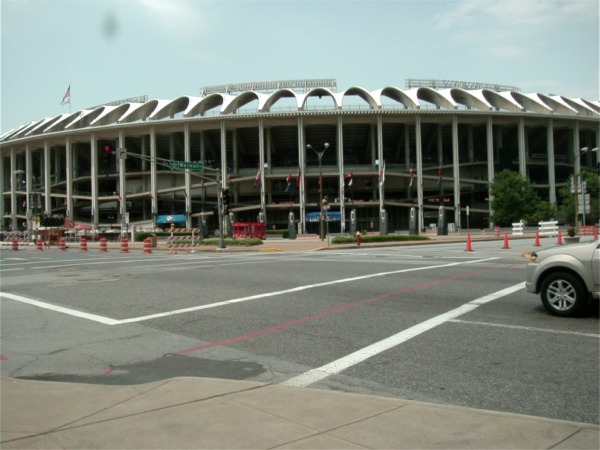
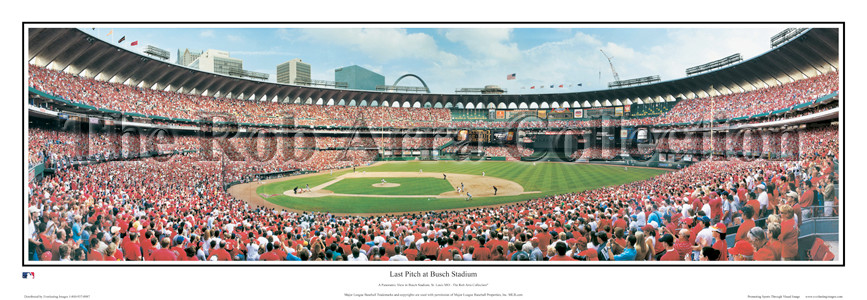
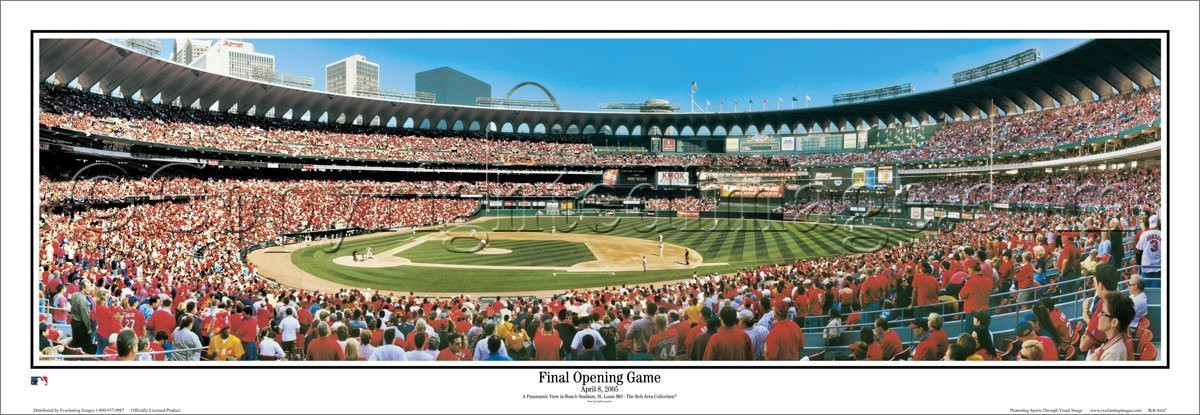
During its final decade, Busch Stadium remained one of the most recognizable landmarks in downtown St. Louis. Fans filled nearby parking garages before making the familiar walk to the ballpark. Upon entering, they arrived at the main concourse level and could access the upper decks via a network of ramps. Once inside, spectators were greeted by a sea of red seats that completely enclosed the field.
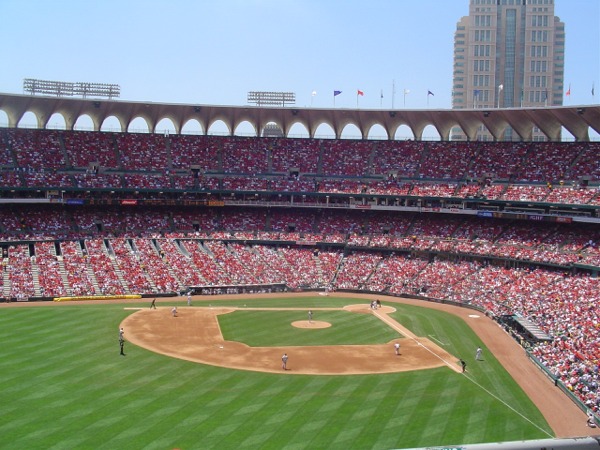
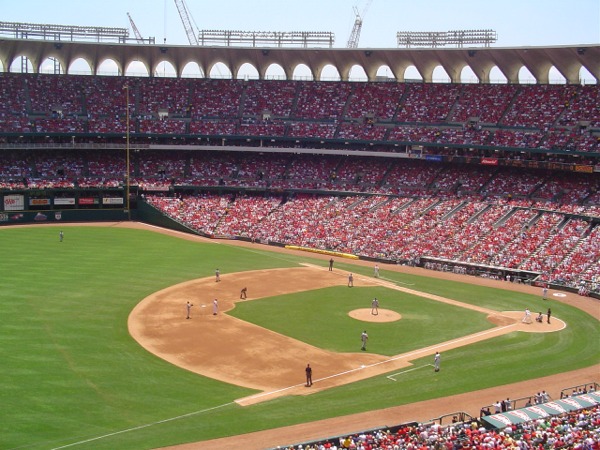
The stadium consisted of four primary seating levels. The lower bowl, originally designed to accommodate football, stretched between the foul poles and provided some of the closest views of the action. Following the 1995 renovations, several rows of premium padded green seats were added near the field. Luxury suites, media facilities, and game-day operations occupied the third level. While the original design featured upper-deck seating that wrapped around the entire stadium, later renovations altered the appearance and gave Busch Stadium far more character than the typical multipurpose stadiums of its era. Among its most distinctive features was the massive manual scoreboard that replaced more than 5,000 upper-deck seats, and the iconic arches that supported the stadium roof. These elements gave Busch Stadium a unique identity and helped transform it from a standard cookie-cutter venue into a stadium with charm.
Over the years, numerous fan amenities were added. The Family Pavilion provided games and activities for younger fans, while Homer’s Landing offered a picnic area overlooking the left-center-field bullpen. A stadium club restaurant and bar gave visitors additional gathering spaces throughout the ballpark. Outside the stadium, the Plaza of Champions honored Cardinals legends with statues of Bob Gibson, Lou Brock, Enos Slaughter, Red Schoendienst, and longtime broadcaster Jack Buck.
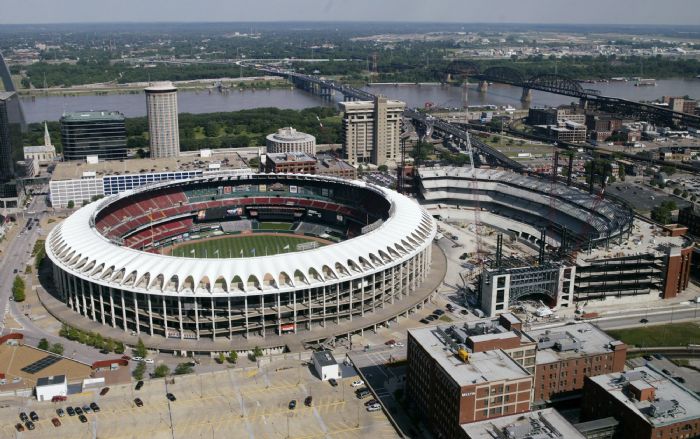
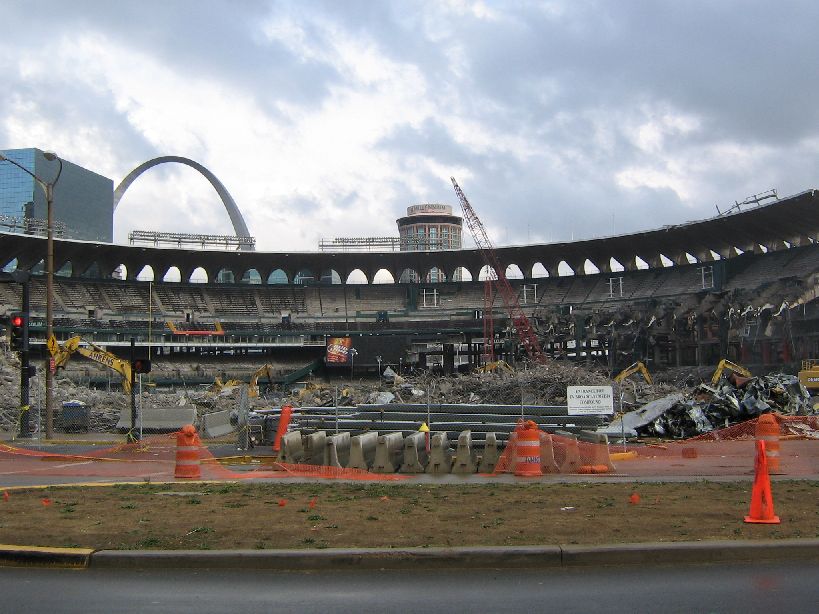
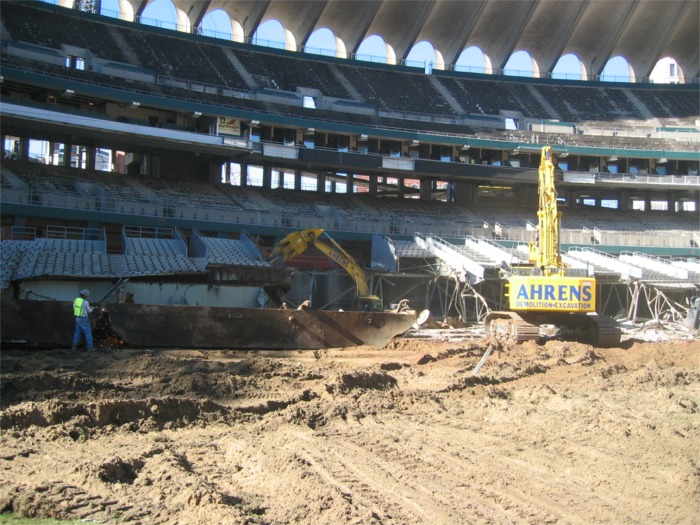
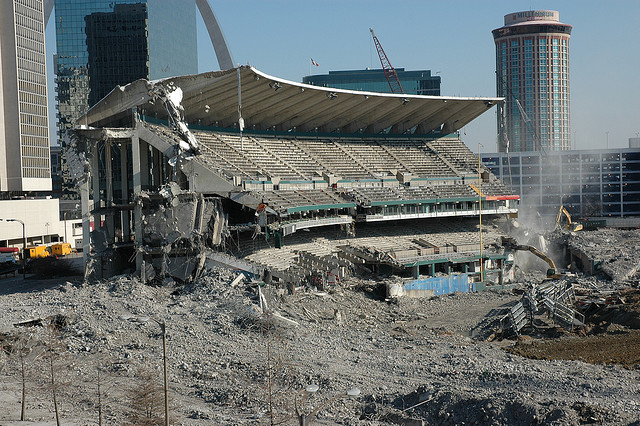
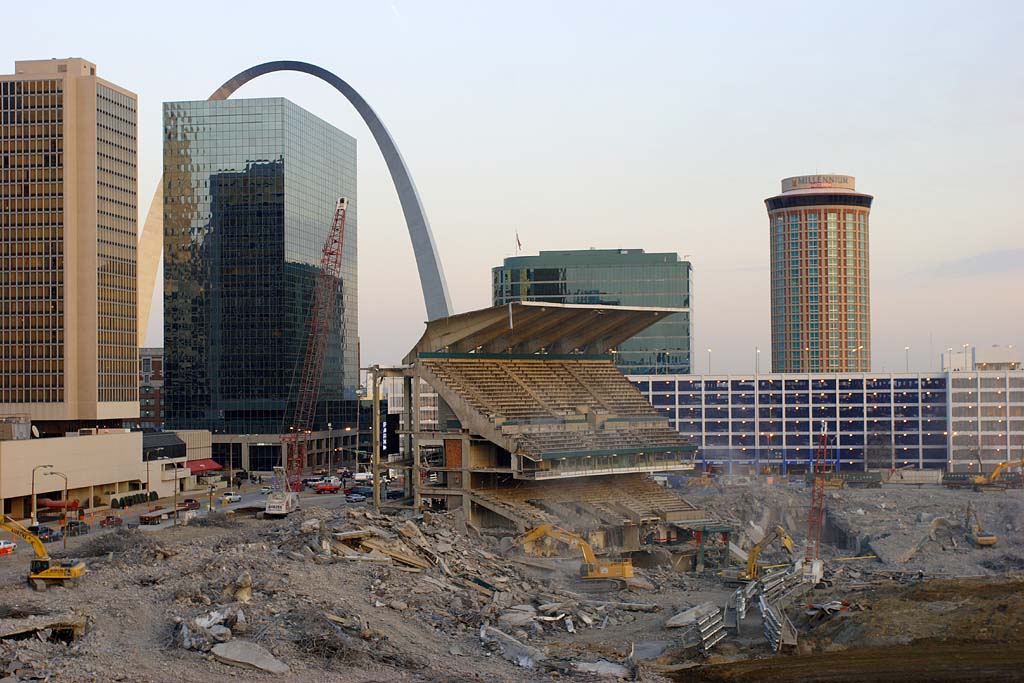
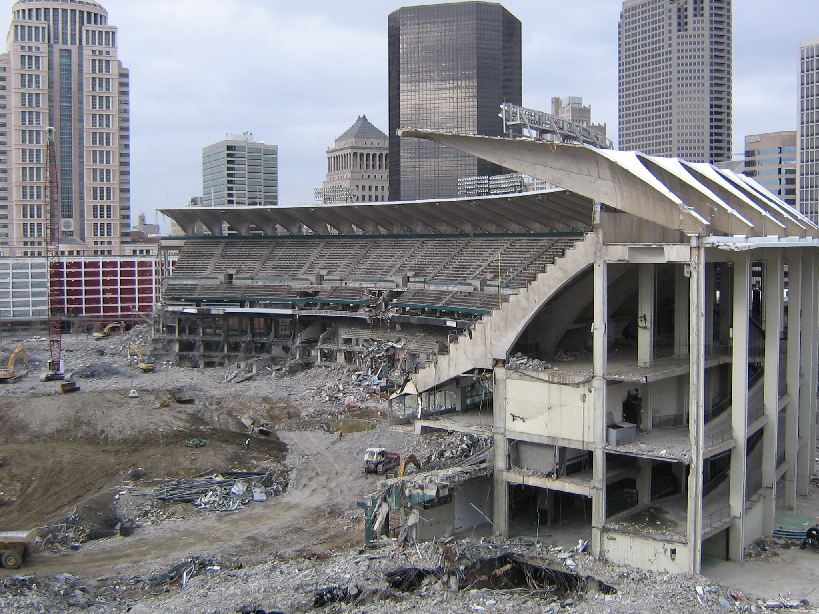
Despite its popularity, Cardinals ownership committed to building a new baseball-only ballpark adjacent to Busch Stadium in 2000. As construction progressed next door, fans began preparing to say goodbye to a stadium that had served the city for nearly four decades. The final game at Busch Stadium was played on October 19, 2005, when the Cardinals fell to the Houston Astros in the National League Championship Series. Just days later, demolition crews began dismantling the stadium. In April 2006, the Cardinals opened a new chapter in franchise history when they moved into the new Busch Stadium.
Busch Stadium Pictures