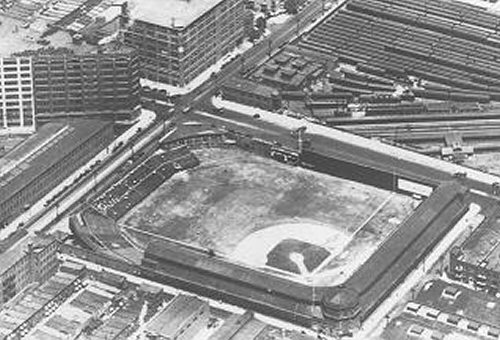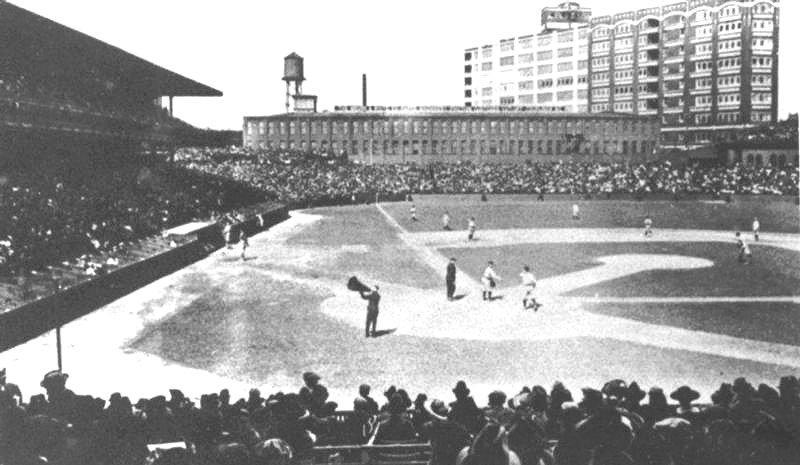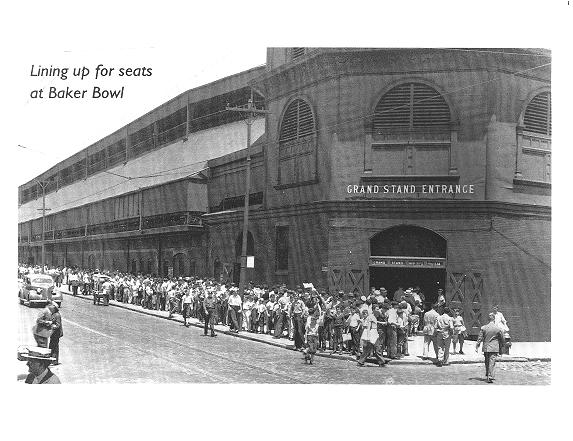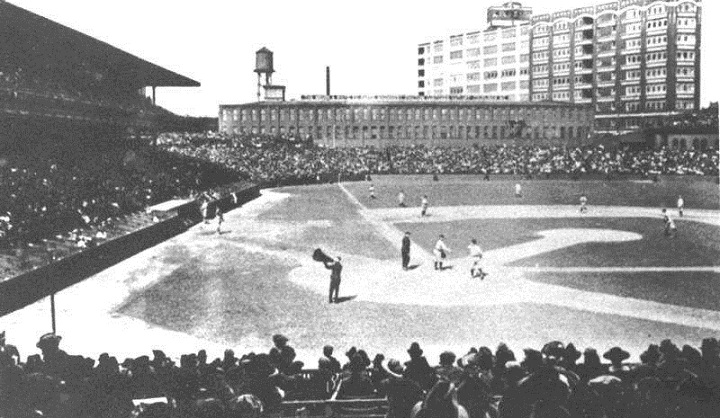
The Baker Bowl was one of baseball’s earliest modern ballparks and served as the home of the Philadelphia Phillies for more than half a century. The site’s history dates to 1887, when the Phillies opened a wooden ballpark in North Philadelphia known as National League Park, or the Huntingdon Street Grounds. The team played its first game there on April 30, 1887. However, the original structure lasted only eight years before being destroyed by fire. A new steel-and-brick stadium was quickly constructed on the same site, opening on May 2, 1895. Known as the Baker Bowl, it was considered one of baseball’s first modern ballparks. The new facility featured a double-deck grandstand extending from first base to third base, with additional seating stretching toward both foul poles and a separate seating section in left field. A unique clubhouse stood beyond center field and formed part of the outfield wall.
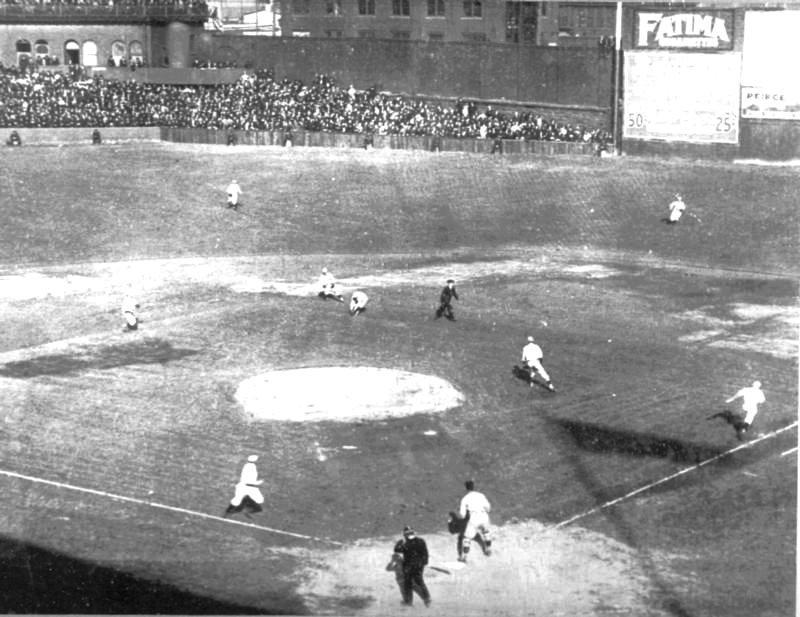
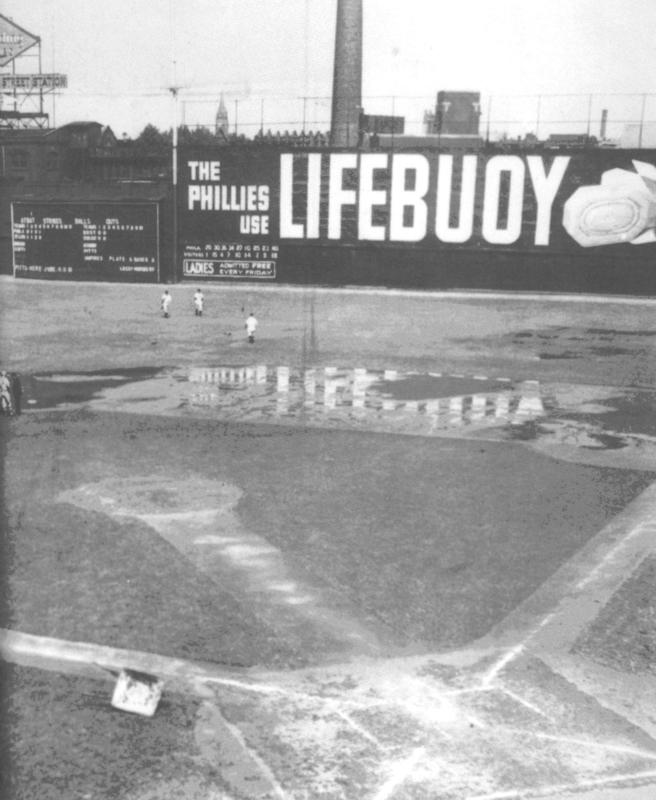
As attendance grew, the Baker Bowl expanded. By 1910, the grandstand had been extended and double-decked down the right-field line, increasing the ballpark’s capacity to approximately 20,000 spectators. Despite its popularity, the Baker Bowl became famous for its unusually compact dimensions. The stadium earned the nickname “the cigar box” because of its hitter-friendly layout, particularly in right field, where the foul pole stood only 279 feet from home plate. To compensate for the short distance, a towering 40-foot wall was erected along the right-field line. Portions of the wall included a scoreboard, and during the ballpark’s final years, a massive Lifebuoy Soap advertisement became one of its most recognizable features. The remainder of the field was far less forgiving. The left-field foul pole stood 341 feet from home plate, while center field stretched to 408 feet, where the clubhouse remained a prominent feature. Fans entered through the ballpark’s distinctive octagonal turret, one of the stadium’s architectural trademarks.
By the 1930s, however, the Baker Bowl was showing its age. Years of structural issues, deterioration, and the absence of lights made the facility increasingly outdated compared to other major league venues. Following the 1938 season, the Phillies abandoned the Baker Bowl and moved across Philadelphia to share Shibe Park with the Philadelphia Athletics. Although the ballpark continued to host various events after the Phillies departed, its days were numbered. The Baker Bowl was ultimately demolished in 1950, bringing an end to the life of one of baseball’s most unique and historic early ballparks.
Baker Bowl Pictures